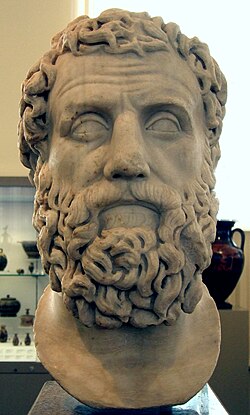
In the grand tapestry of human intellectual history, few names shine as brilliantly or as enduringly as Aristotle.
Born in 384 BCE in ancient Macedonia, this extraordinary philosopher, scientist, and teacher became the intellectual cornerstone upon which much of Western civilization was built.
As a student of Plato and the personal tutor of Alexander the Great, Aristotle occupied a unique position at the crossroads of power and wisdom, shaping the minds of kings while simultaneously exploring the deepest questions of existence, ethics, and the natural world.
Aristotle quotes capture the essence of a mind so vast and versatile that he wrote authoritatively on subjects ranging from biology and physics to poetry, politics, and the nature of happiness itself.
What sets Aristotle apart from other ancient thinkers is his remarkable ability to ground philosophical inquiry in practical, observable reality.
Rather than retreating into abstract idealism, he championed reason, balance, and the pursuit of virtue as the keys to a fulfilling life.
Aristotle quotes reflect this grounded approach, offering wisdom that feels as applicable in today’s fast-paced, complex world as it did in the bustling agora of ancient Athens.
Whether you are seeking guidance on leadership, personal excellence, friendship, or the art of persuasion, his insights provide a timeless compass for navigating life’s most meaningful questions with clarity and purpose.
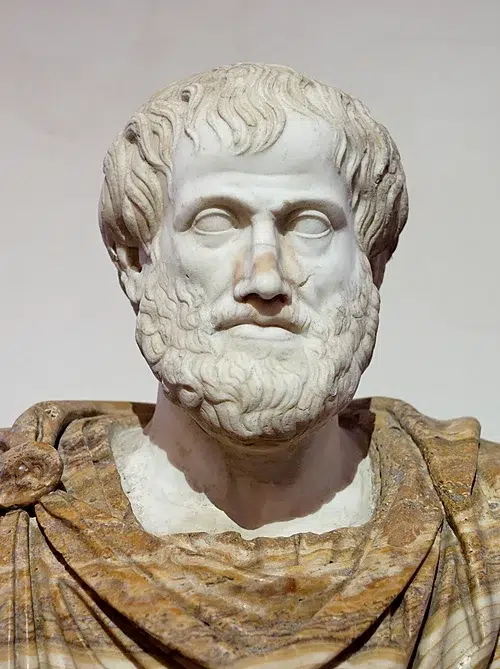
Best Aristotle Quotes
1. Excellence is never an accident. It is always the result of high intention, sincere effort, and intelligent execution.
2. Our problem is not that we aim too high and miss, but that we aim too low and hit.
3. The proof that you know something is that you are able to teach it.
4. Anybody can become angry – that is easy, but to be angry with the right person and to the right degree and at the right time and for the right purpose, and in the right way – that is not within everybody’s power and is not easy.
5. True happiness comes from gaining insight and growing into your best possible self. Otherwise all you’re having is immediate gratification pleasure, which is fleeting and doesn’t grow you as a person.
6. What is the essence of life? To serve others and to do good.
7. Life cannot be lived, and understood, simultaneously.
8. It is a part of probability that many improbable things will happen.
9. Health is a matter of choice, not a mystery of chance.
10. The habits we form from childhood make no small difference, but rather they make all the difference.
11. The tyrant, who in order to hold his power, suppresses every superiority, does away with good men, forbids education and light, controls every movement of the citizens and, keeping them under a perpetual servitude, wants them to grow accustomed to baseness and cowardice, has his spies everywhere to listen to what is said in the meetings, and spreads dissension and calumny among the citizens and impoverishes them, is obliged to make war in order to keep his subjects occupied and impose on them permanent need of a chief.
12. You can never learn anything that you did not already know.
13. Virtue means doing the right thing, in relation to the right person, at the right time, to the right extent, in the right manner, and for the right purpose. Thus, to give money away is quite a simple task, but for the act to be virtuous, the donor must give to the right person, for the right purpose, in the right amount, in the right manner, and at the right time.
14. Happiness is the reward of virtue.
15. Everybody loves a thing more if it has cost him trouble: for instance those who have made money love money more than those who have inherited it.
16. You are what you do repeatedly.
17. A friend is another I.
18. In order to be effective you need not only virtue but also mental strength.
19. We laugh at that which we cannot bear to face.
20. The self-indulgent man craves for all pleasant things… and is led by his appetite to choose these at the cost of everything else.
21. Excellence is not an art. It is the habit of practice.
22. Human beings are curious by nature.
23. Dignity does not consist in possessing honors, but in deserving them.
24. It is well to be up before daybreak, for such habits contribute to health, wealth, and wisdom.
25. The bad man is continually at war with, and in opposition to, himself.
26. A friend is simply one soul in two bodies.
27. Plato is my friend, but truth is a better friend.
28. Every man should be responsible to others, nor should any one be allowed to do just as he pleases; for where absolute freedom is allowed, there is nothing to restrain the evil which is inherent in every man.
29. Virtue is more clearly shown in the performance of fine ACTIONS than in the non-performance of base ones.
30. Where it is in our power to act, it is also in our power to not act.
31. Friends are much better tried in bad fortune than in good.
32. Every virtue is a mean between two extremes, each of which is a vice.
33. Life in the true sense is perceiving or thinking.
34. He who takes his fill of every pleasure … becomes depraved; while he who avoids all pleasures alike … becomes insensible.
35. He who sees things grow from the beginning will have the best view of them.
36. Injustice results as much from treating unequals equally as from treating equals unequally.
37. The energy or active exercise of the mind constitutes life.
38. All men seek one goal: success or happiness.
39. Happiness is prosperity combined with virtue.
40. Of the modes of persuasion furnished by the spoken word there are three kinds. The first kind depends on the personal character ofthe speaker; the second on putting the audience into a certain frame of mind; the third on the proof, provided by the words of the speech itself.
41. The specific excellence of verbal expression in poetry is to be clear without being low.
42. But what is happiness? If we consider what the function of man is, we find that happiness is a virtuous activity of the soul.
43. Friendship also seems to be the bond that hold communities together.
44. Those who educate children well are more to be honored than they who produce them; for these only gave them life, those the art of living well.
45. The arousing of prejudice, pity, anger, and similar emotions has nothing to do with the essential facts, but is merely a personal appeal to the man who is judging the case.
46. It is possible to fail in many ways…while to succeed is possible only in one way.
47. Of governments there are said to be only two forms – democracy and oligarchy. For aristocracy is considered to be a kind of oligarchy, as being the rule of a few, and the so-called constitutional government to be really a democracy.
48. All who have meditated on the art of governing mankind have been convinced that the fate of empires depends on the education of youth.
49. The family is the association established by nature for the supply of men’s everyday wants.
50. If happiness is activity in accordance with excellence, it is reasonable that it should be in accordance with the highest excellence.
51. The law is reason, free from passion.
52. All men seek one goal: success or happiness.
53. Personal beauty requires that one should be tall; little people may have charm and elegance, but beauty-no.
54. A man’s happiness consists in the free exercise of his highest faculties.
55. For we do not think that we know a thing until we are acquainted with its primary conditions or first principles, and have carried our analysis as far as its simplest elements.
56. The specific excellence of verbal expression in poetry is to be clear without being low.
57. Music imitates (represents) the passions or states of the soul, such as gentleness, anger, courage, temperance, and their opposites.
58. Every man should be responsible to others, nor should anyone be allowed to do just as he pleases; for where absolute freedom is allowed there is nothing to restrain the evil which is inherent in every man. But the principle of responsibility secures that which is the greatest good in states; the right persons rule and are prevented from doing wrong, and the people have their due. It is evident that this is the best kind of democracy, and why? because the people are drawn from a certain class.
59. Music has the power of producing a certain effect on the moral character of the soul, and if it has the power to do this, it is clear that the young must be directed to music and must be educated in it.
60. Men in general desire the good and not merely what their fathers had.
61. Men are marked from the moment of birth to rule or be ruled.
62. Today you can start forming habits for overcoming all obstacles in life… even nicotine cravings.
63. Friendship is communion.
64. The hand is the tool of tools.
65. People generally despise where they flatter.
66. It must not be supposed that happiness will demand many or great possessions; for self-sufficiency does not depend on excessive abundance, nor does moral conduct, and it is possible to perform noble deeds even without being ruler of land and sea: one can do virtuous acts with quite moderate resources. This may be clearly observed in experience: private citizens do not seem to be less but more given to doing virtuous actions than princes and potentates. It is sufficient then if moderate resources are forthcoming; for a life of virtuous activity will be essentially a happy life.
67. A tragedy is the imitation of an action that is serious and also, as having magnitude, complete in itself . . . with incidents arousing pity and fear, wherewith to accomplish its catharsis of such emotions.
68. Man by Nature desires to know.
69. Poetry is finer and more philosophical than history; for poetry expresses the universal, and history only the particular.
70. Art completes what nature cannot bring to finish. The artist gives us knowledge of nature’s unrealized ends.
71. The soul is characterized by these capacities; self-nutrition, sensation, thinking, and movement.
72. In the perfect state the good man is absolutely the same as the good citizen; whereas in other states the good citizen is only good relatively to his own form of government.
73. While most of those who hold that the whole heaven is finite say that the earth lies at the center, the philosophers of Italy, the so-called Pythagoreans, assert the contrary. They say that in the middle there is fire, and that the earth is one of the stars, and by its circular motion round the center produces night and day.
74. Nature makes nothing incomplete, and nothing in vain.
75. Quality is not an act, it is a habit.
76. Happiness itself is sufficient excuse. Beautiful things are right and true; so beautiful actions are those pleasing to the gods. Wise men have an inward sense of what is beautiful, and the highest wisdom is to trust this intuition and be guided by it. The answer to the last appeal of what is right lies within a man’s own breast. Trust thyself.
77. Those who merely possess the goods of fortune may be haughty and insolent; . . . they try to imitate the great-souled man without being really like him, and only copy him in what they can, reproducing his contempt for others but not his virtuous conduct. For the great-souled man is justified in despising other people – his estimates are correct; but most proud men have no good ground for their pride.
78. The student of politics therefore as well as the psychologist must study the nature of the soul.
79. Anyone, without any great penetration, may distinguish the dispositions consequent on wealth; for its possessors are insolent and overbearing, from being tainted in a certain way by the getting of their wealth. For they are affected as though they possessed every good; since wealth is a sort of standard of the worth of other things; whence every thing seems to be purchasable by it.
80. The soul is the form of the body.
81. The only stable principle of government is equality according to proportion, and for every man to enjoy his own.
82. All men by nature desire to know. An indication of this is the delight we take in our senses; for even apart from their usefulness they are loved for themselves…
83. It is evident, then, that there is a sort of education in which parents should train their sons, not as being useful or necessary, but because it is liberal or noble.
84. That which is common to the greatest number has the least care bestowed upon it.
85. Any change of government which has to be introduced should be one which men, starting from their existing constitutions, will be both willing and able to adopt, since there is quite as much trouble in the reformation of an old constitution as in the establishment of a new one, just as to unlearn is as hard as to learn.
86. Let us be well persuaded that everyone of us possesses happiness in proportion to his virtue and wisdom, and according as he acts in obedience to their suggestion.
87. The line has magnitude in one way, the plane in two ways, and the solid in three ways, and beyond these there is no other magnitude because the three are all.
88. The duty of rhetoric is to deal with such matters as we deliberate upon without arts or systems to guide us, in the hearing of persons who cannot take in at a glance a complicated argument or follow a long chain of reasoning.
89. Remember that time slurs over everything, let all deeds fade, blurs all writings and kills all memories. Exempt are only those which dig into the hearts of men by love.
90. Moral virtue is a mean . . . between two vices, one of excess and the other of defect; . . . it is such a mean because it aims at hitting the middle point in feelings and in actions. This is why it is a hard task to be good, for it is hard to find the middle point in anything.
91. Beauty depends on size as well as symmetry. No very small animal can be beautiful, for looking at it takes so small a portion of time that the impression of it will be confused. Nor can any very large one, for a whole view of it cannot be had at once, and so there will be no unity and completeness.
92. What has soul in it differs from what has not, in that the former displays life. Now this word has more than one sense, and provided any one alone of these is found in a thing we say that thing is living. Living, that is, may mean thinking or perception or local movement and rest, or movement in the sense of nutrition, decay and growth. Hence we think of plants also as living, for they are observed to possess in themselves an originative power through which they increase or decrease in all spatial directions.
93. It is absurd to hold that a man ought to be ashamed of being unable to defend himself with his limbs, but not of being unable to defend himself with speech and reason, when the use of rational speech is more distinctive of a human being than the use of his limbs.
94. Greatness of spirit is to bear finely both good fourtune and bad, honor and disgrace, and not to think highly of luxury or attention or power or victories in contests, and to possess a certain depth and magnitude of spirit.
95. In poverty and other misfortunes of life, true friends are a sure refuge. The young they keep out of mischief; to the old they are a comfort and aid in their weakness, and those in the prime of life they incite to noble deeds.
96. In a democracy the poor will have more power than the rich, because there are more of them, and the will of the majority is supreme.
97. It is in justice that the ordering of society is centered.
98. Man perfected by society is the best of all animals; he is the most terrible of all when he lives without law, and without justice.
99. The most perfect political community must be amongst those who are in the middle rank, and those states are best instituted wherein these are a larger and more respectable part, if possible, than both the other; or, if that cannot be, at least than either of them separate.
100. Since we think we understand when we know the explanation, and there are four types of explanation (one, what it is to be a thing; one, that if certain things hold it is necessary that this does; another, what initiated the change; and fourth, the aim), all these are proved through the middle term.
101. A constitution is the arrangement of magistracies in a state.
102. Memory is therefore, neither Perception nor Conception, but a state or affection of one of these, conditioned by lapse of time. As already observed, there is no such thing as memory of the present while present, for the present is object only of perception, and the future, of expectation, but the object of memory is the past. All memory, therefore, implies a time elapsed; consequently only those animals which perceive time remember, and the organ whereby they perceive time is also that whereby they remember.
103. It is our actions and the soul’s active exercise of its functions that we posit (as being Happiness).
104. For legislators make the citizens good by forming habits in them, and this is the wish of every legislator, and those who do not effect it miss their mark, and it is in this that a good constitution differs from a bad one.
105. Marriage is like retiring as a bachelor and getting a sexual pension. You don’t have to work for the sex any more, but you only get 65% as much.
106. What is the highest of all goods achievable by action? …both the general run of man and people of superior refinement say that it is happiness …but with regard to what happiness is they differ.
107. He who confers a benefit on anyone loves him better than he is beloved.
108. Wit is educated insolence.
109. Poetry demands a man with a special gift for it, or else one with a touch of madness in him.
110. Think as wise men do, but speak as the common people do.
111. That judges of important causes should hold office for life is a questionable thing, for the mind grows old as well as the body.
112. There are some jobs in which it is impossible for a man to be virtuous.
113. A state is not a mere society, having a common place, established for the prevention of mutual crime and for the sake of exchange. Political society exists for the sake of noble actions, and not mere companionship.
114. Everything that depends on the action of nature is by nature as good as it can be.
115. Virtue also depends on ourselves. And so also does vice. For where we are free to act we are also free to refrain from acting, and where we are able to say No we are also able to say Yes; if therefore we are responsible for doing a thing when to do it right, we are also responsible for not doing it when not to do it is wrong, and if we are responsible for rightly not doing a thing, we are also responsible for wrongly doing it.
116. In as much as every family is a part of a state, and these relationships are the parts of a family, and the virtue of the part must have regard to the virtue of the whole, women and children must be trained by education with an eye to the constitution, if the virtues of either of them are supposed to make any difference in the virtues of the state. And they must make a difference: for the children grow up to be citizens, and half the free persons in a state are women.
117. Man first begins to philosophize when the necessities of life are supplied.
118. Choice, not chance, determines your destiny.
119. Criticism is something we can avoid easily by saying nothing, doing nothing, and being nothing.
120. The high-minded man must care more for the truth than for what people think.
121. The intelligence consists not only in the knowledge but also in the skill to apply the knowledge into practice.
122. The high-minded man does not bear grudges, for it is not the mark of a great soul to remember injuries, but to forget them.
123. When there is no middle class, and the poor greatly exceed in number, troubles arise, and the state soon comes to an end.
124. The only stable state is the one in which all men are equal before the law.
125. What you have to learn to do, you learn by doing.
126. Happiness is the meaning and the purpose of life, the whole aim and end of human existence.
127. The best way to avoid envy is to deserve the success you get.
128. The man who is content to live alone is either a beast or a god.
129. Well begun is half done.
130. Those who cannot bravely face danger are the slaves of their attackers.
131. It is no part of a physician’s business to use either persuasion or compulsion upon the patients.
132. Patience is bitter, but it’s fruit is sweet.
133. Peace is more difficult than war.
134. The greatest crimes are caused by surfeit, not by want.
135. A man becomes a friend whenever being loved he loves in return.
136. Obstinate people can be divided into the opinionated, the ignorant, and the boorish.
137. We deliberate not about ends, but about means.
138. Of the tyrant, spies and informers are the principal instruments. War is his favorite occupation, for the sake of engrossing the attention of the people, and making himself necessary to them as their leader.
139. Those that know, do. Those that understand, teach.
140. Self-sufficiency is both a good and an absolute good.
141. Good habits formed at youth make all the difference.
142. When you feel yourself lacking something, send your thoughts towards your Intimate and search for the Divinity that lives within you.
143. The unfortunate need people who will be kind to them; the prosperous need people to be kind to.
144. Happiness, then, is found to be something perfect and self-sufficient, being the end to which our actions are directed.
145. Friendship is a single soul dwelling in two bodies.
146. The educated differ from the uneducated as much as the living from the dead.
147. Why is it that all men who are outstanding in philosophy, poetry or the arts are melancholic?
148. The life of theoretical philosophy is the best and happiest a man can lead. Few men are capable of it and then only intermittently. For the rest there is a second-best way of life, that of moral virtue and practical wisdom.
149. Courage is a mean with regard to fear and confidence.
150. Metaphysics involves intuitive knowledge of unprovable starting-points concepts and truth and demonstrative knowledge of what follows from them.
151. Even that some people try deceived me many times … I will not fail to believe that somewhere, someone deserves my trust.
152. Knowing what is right does not make a sagacious man.
153. All men are alike when asleep.
154. True happiness flows from the possession of wisdom and virtue and not from the possession of external goods.
155. Different men seek after happiness in different ways and by different means, and so make for themselves different modes of life and forms of government.
156. My best friend is the man who in wishing me well wishes it for my sake.
157. The misanthrope, as an essentially solitary man, is not a man at all: he must be a beast or a god.
158. There is honor in being a dog.
159. The light of the day is followed by night, as a shadow follows a body.
160. Tools may be animate as well as inanimate; for instance, a ship’s captain uses a lifeless rudder, but a living man for watch; for a servant is, from the point of view of his craft, categorized as one of its tools. So any piece of property can be regarded as a tool enabling a man to live, and his property is an assemblage of such tools; a slave is a sort of living piece of property; and like any other servant is a tool in charge of other tools.
161. Money is a guarantee that we may have what we want in the future. Though we need nothing at the moment it insures the possibility of satisfying a new desire when it arises.
162. The ideal man takes joy in doing favors for others.
163. Law is mind without reason.
164. The aim of education is to make the pupil like and dislike what he ought….The little human animal will not at first have the right responses. It must be trained to feel pleasure, liking, disgust, and hatred at those things which really are pleasant, likable, disgusting, and hateful.
165. He who is by nature not his own but another’s man is by nature a slave.
166. Of the modes of persuasion furnished by the spoken word there are three kinds. The first kind depends on the personal character ofthe speaker; the second on putting the audience into a certain frame of mind; the third on the proof, provided by the words of the speech itself.
167. Yes the truth is that men’s ambition and their desire to make money are among the most frequent causes of deliberate acts of injustice.
168. We must be neither cowardly nor rash but courageous.
169. Jealousy is both reasonable and belongs to reasonable men, while envy is base and belongs to the base, for the one makes himself get good things by jealousy, while the other does not allow his neighbour to have them through envy.
170. The Life of the intellect is the best and pleasantest for man, because the intellect more than anything else is the man. Thus it will be the happiest life as well.
171. Happiness is something final and complete in itself, as being the aim and end of all practical activities whatever …. Happiness then we define as the active exercise of the mind in conformity with perfect goodness or virtue.
172. Definition of tragedy: A hero destroyed by the excess of his virtues.
173. Every wicked man is in ignorance as to what he ought to do, and from what to abstain, and it is because of error such as this that men become unjust and, in a word, wicked.
174. A king ruleth as he ought, a tyrant as he lists, a king to the profit of all, a tyrant only to please a few.
175. Men acquire a particular quality by constantly acting in a particular way.
176. Men must be able to engage in business and go to war, but leisure and peace are better; they must do what is necessary and indeed what is useful, but what is honorable is better. On such principles children and persons of every age which requires education should be trained.
177. Melancholy men, of all others, are the most witty.
178. Women who are with child should be careful of themselves; they should take exercise and have a nourishing diet. The first of these prescriptions the legislator will easily carry into effect by requiring that they should take a walk daily to some temple, where they can worship the gods who preside over birth. Their minds, however, unlike their bodies, they ought to keep quiet, for the offspring derive their natures from their mothers as plants do from earth.
179. We are what we repeatedly do.
180. Now the goodness that we have to consider is clearly human goodness, since the good or happiness which we set out to seek was human good and human happiness. But human goodness means in our view excellence of soul, not excellence of body.
181. In a race, the quickest runner can never overtake the slowest, since the pursuer must first reach the point whence the pursued started, so that the slower must always hold a lead.
182. Perfect friendship is the friendship of men who are good, and alike in excellence; for these wish well alike to each other qua good, and they are good in themselves.
183. We must not listen to those who advise us ‘being men to think human thoughts, and being mortal to think mortal thoughts’ but must put on immortality as much as possible and strain every nerve to live according to that best part of us, which, being small in bulk, yet much more in its power and honour surpasses all else.
184. Our actions determine our dispositions.
185. One kind of justice is that which is manifested in distributions of honour or money or the other things that fall to be divided among those who have a share in the constitution … and another kind is that which plays a rectifying part in transactions.
186. The body is most fully developed from thirty to thirty-five years of age, the mind at about forty-nine.
187. Education begins at the level of the learner.
188. Speeches are like babies-easy to conceive but hard to deliver.
189. A period may be defined as a portion of speech that has in itself a beginning and an end, being at the same time not too big to be taken in at a glance.
190. There is more both of beauty and of raison d’etre in the works of nature- than in those of art.
191. Happiness, then, is co-extensive with contemplation, and the more people contemplate, the happier they are; not incidentally, but in virtue of their contemplation, because it is in itself precious. Thus happiness is a form of contemplation.
192. No one will dare maintain that it is better to do injustice than to bear it.
193. The generality of men are naturally apt to be swayed by fear rather than reverence, and to refrain from evil rather because of the punishment that it brings than because of its own foulness.
194. Human good turns out to be activity of soul exhibiting excellence, and if there is more than one sort of excellence, in accordance with the best and most complete.Foroneswallowdoesnot makea summer, nor does one day; and so too one day, or a short time, does not make a man blessed and happy.
195. A constitution is the arrangement of magistracies in a state, especially of the highest of all. The government is everywhere sovereign in the state, and the constitution is in fact the government.
196. The error of Socrates must be attributed to the false notion of unity from which he starts. Unity there should be, both of the family and of the state, but in some respects only. For there is a point at which a state may attain such a degree of unity as to be no longer a state, or at which, without actually ceasing to exist, it will become an inferior state, like harmony passing into unison, or rhythm which has been reduced to a single foot. The state, as I was saying, is a plurality which should be united and made into a community by education.
197. And this lies in the nature of things: What people are potentially is revealed in actuality by what they produce.
198. It is through wonder that men now begin and originally began to philosophize; wondering in the first place at obvious perplexities, and then by gradual progression raising questions about the greater matters too.
199. One can aim at honor both as one ought, and more than one ought, and less than one ought. He whose craving for honor is excessive is said to be ambitious, and he who is deficient in this respect unambitious; while he who observes the mean has no peculiar name.
200. The life of children, as much as that of intemperate men, is wholly governed by their desires.
201. Thinking is different from perceiving and is held to be in part imagination, in part judgment.
202. In a word, acts of any kind produce habits or characters of the same kind. Hence we ought to make sure that our acts are of a certain kind; for the resulting character varies as they vary. It makes no small difference, therefore, whether a man be trained in his youth up in this way or that, but a great difference, or rather all the difference.
203. A friend is a second self, so that our consciousness of a friend’s existence…makes us more fully conscious of our own existence.
204. A life of wealth and many belongings is only a means to happiness. Honor, power, and success cannot be happiness because they depend on the whims of others, and happiness should be self-contained, complete in itself.
205. The male has more teeth than the female in mankind, and sheep and goats, and swine. This has not been observed in other animals. Those persons which have the greatest number of teeth are the longest lived; those which have them widely separated, smaller, and more scattered, are generally more short lived.
206. To learn is a natural pleasure, not confined to philosophers, but common to all men.
207. The Good of man is the active exercise of his soul’s faculties in conformity with excellence or virtue, or if there be several human excellences or virtues, in conformity with the best and most perfect among them.
208. I have gained this from philosophy: that I do without being commanded what others do only from fear of the law.
209. Irrational passions would seem to be as much a part of human nature as is reason.
210. And of course, the brain is not responsible for any of the sensations at all. The correct view is that the seat and source of sensation is the region of the heart.
211. He is courageous who endures and fears the right thing, for the right motive, in the right way and at the right times.
212. For imagining lies within our power whenever we wish . . . but in forming opinons we are not free . . .
213. Rightness in our choice of an end is secured by [Moral] Virtue.
214. The greatest thing in style is to have a command of metaphor.
215. With the truth, all given facts harmonize; but with what is false, the truth soon hits a wrong note.
216. For it is owing to their wonder that men both now begin and at first began to philosophize… They were pursuing science in order to know, and not for any utilitarian end.
217. Anything whose presence or absence makes no discernible difference is no essential part of the whole.
218. There is an error common to both oligarchies and to democracies: in the latter the demagogues, when the multitude are above the law, are always cutting the city in two by quarrels with the rich, whereas they should always profess to be maintaining their cause; just as in oligarchies the oligarchs should profess to maintain the cause of the people, . .
219. Thus then a single harmony orders the composition of the whole…by the mingling of the most contrary principles.
220. This body is not a home, but an inn; and that only for a short time. Seneca Friendship is composed of a single soul inhabiting two bodies.
221. Young men have strong passions and tend to gratify them indiscriminately. Of the bodily desires, it is the sexual by which they are most swayed and in which they show absence of control…They are changeable and fickle in their desires which are violent while they last, but quickly over: their impulses are keen but not deep rooted.
222. Now it is evident that the form of government is best in which every man, whoever he is, can act best and live happily.
223. [Prudence] is the virtue of that part of the intellect [the calculative] to which it belongs; and . . . our choice of actions will not be right without Prudence any more than without Moral Virtue, since, while Moral Virtue enables us to achieve the end, Prudence makes us adopt the right means to the end.
224. Knowing yourself is the beginning of all wisdom.
225. We are what we repeatedly do… excellence, therefore, isn’t just an act, but a habit and life isn’t just a series of events, but an ongoing process of self-definition.
226. Happiness is a quality of the soul…not a function of one’s material circumstances.
227. He who cannot be a good follower cannot be a good leader.
228. Character is made by many acts; it may be lost by a single one.
229. Before you heal the body you must first heal the mind.
230. If something’s bound to happen, it will happen.. Right time, right person, and for the best reason.
231. Love is composed of a single soul inhabiting two bodies.
232. Knowing yourself is the beginning of all wisdom.
233. Anybody can get hit over the head.
234. They – Young People have exalted notions, because they have not been humbled by life or learned its necessary limitations; moreover, their hopeful disposition makes them think themselves equal to great things – and that means having exalted notions. They would always rather do noble deeds than useful ones: Their lives are regulated more by moral feeling than by reasoning – all their mistakes are in the direction of doing things excessively and vehemently. They overdo everything – they love too much, hate too much, and the same with everything else.
235. All persons ought to endeavor to follow what is right, and not what is established.
236. Nature of man is not what he was born as, but what he is born for.
237. In all things of nature there is something of the marvelous.
238. Time crumbles things; everything grows old under the power of Time and is forgotten through the lapse of Time.
239. Finally, if nothing can be truly asserted, even the following claim would be false, the claim that there is no true assertion.
240. We do not know a truth without knowing its cause.
241. Fate of empires depends on the education of youth.
242. The probable is what usually happens.
243. The same ideas, one must believe, recur in men’s minds not once or twice but again and again.
244. We should aim rather at leveling down our desires than leveling up our means.
245. When the storytelling goes bad in a society, the result is decadence.
246. Nothing is what rocks dream about.
247. The least initial deviation from the truth is multiplied later a thousandfold.
248. Happiness is the settling of the soul into its most appropriate spot.
249. Temperance and bravery, then, are ruined by excess and deficiency, but preserved by the mean.
250. Pay attention to the young, and make them just as good as possible.
251. If the poor, for example, because they are more in number, divide among themselves the property of the rich,- is not this unjust? . . this law of confiscation clearly cannot be just.
252. The science that studies the supreme good for man is politics.
253. That which is impossible and probable is better than that which is possible and improbable.
254. God and nature create nothing that does not fulfill a purpose.
255. Everything that depends on the action of nature is by nature as good as it can be, and similarly everything that depends on art or any rational cause, and especially if it depends on the best of all causes.
256. For we do not think that we know a thing until we are acquainted with its primary conditions or first principles, and have carried our analysis as far as its simplest elements.
257. The ultimate value of life depends upon awareness and the power of contemplation rather than upon mere survival.
258. Man is by nature a political animal.
259. All Earthquakes and Disasters are warnings; there’s too much corruption in the world.
260. Maybe crying is a means of cleaning yourself out emotionally. Or maybe it’s your last resort; the only way to express yourself when words fail, the same as when you were a baby and had no words.
261. We become just by performing just action, temperate by performing temperate actions, brave by performing brave action.
262. Every rascal is not a thief, but every thief is a rascal.
263. The real difference between democracy and oligarchy is poverty and wealth. Wherever men rule by reason of their wealth, whether they be few or many, that is an oligarchy, and where the poor rule, that is a democracy.
264. The true nature of a thing is the highest it can become.
265. The energy or active exercise of the mind constitutes life.
266. The mass of mankind are evidently slavish in their tastes, preferring a life suitable to beasts.
267. A tyrant must put on the appearance of uncommon devotion to religion. Subjects are less apprehensive of illegal treatment from a ruler whom they consider god-fearing and pious. On the other hand, they do less easily move against him, believing that he has the gods on his side.
268. When Pleasure is at the bar the jury is not impartial.
269. The soul suffers when the body is diseased or traumatized, while the body suffers when the soul is ailing.
270. And in as much as the great-souled man deserves most, he must be the best of men; for the better a man is the more he deserves, and he that is best deserves most. Therefore the truly great-souled man must be a good man. Indeed greatness in each of the virtues would seem to go with greatness of soul.
271. I seek to bring forth what you almost already know.
272. One has no friend who has many friends.
273. We can do noble acts without ruling the earth and sea.
274. One would have thought that it was even more necessary to limit population than property; and that the limit should be fixed by calculating the chances of mortality in the children, and of sterility in married persons. The neglect of this subject, which in existing states is so common, is a never-failing cause of poverty among the citizens; and poverty is the parent of revolution and crime.
275. Comedy aims at representing men as worse, Tragedy as better than in actual life.
276. Democracy is the form of government in which the free are rulers.
277. The beginning, as the proverb says, is half the whole.
278. To the size of the state there is a limit, as there is to plants, animals and implements, for none of these retain their facility when they are too large.
279. The greatest thing by far is to have a command of metaphor. This alone cannot be imparted by another; it is the mark of genius, for to make good metaphors implies an eye for resemblances.
280. A whole is that which has a beginning, a middle and an end.
281. We must as second best, as people say, take the least of the evils.
282. Bashfulness is an ornament to youth, but a reproach to old age.
283. A democracy when put to the strain grows weak, and is supplanted by Oligarchy.
284. It is clear that those constitutions which aim at the common good are right, as being in accord with absolute justice; while those which aim only at the good of the rulers are wrong.
285. The first principle of all action is leisure.
286. It is the active exercise of our faculties in conformity with virtue that causes happiness, and the opposite activities its opposite.
287. In general, what is written must be easy to read and easy to speak; which is the same.
288. Humor is the only test of gravity, and gravity of humor; for a subject which will not bear raillery is suspicious, and a jest which will not bear serious examination is false wit.
289. But nothing is yet clear on the subject of the intellect and the contemplative faculty. However, it seems to be another kind of soul, and this alone admits of being separated, as that which is eternal from that which is perishable, while it is clear from these remarks that the other parts of the soul are not separable, as some assert them to be, though it is obvious that they are conceptually distinct.
290. Life is full of chances and changes, and the most prosperous of men may in the evening of his days meet with great misfortunes.
291. A line is not made up of points. … In the same way, time is not made up parts considered as indivisible ‘nows.’ Part of Aristotle’s reply to Zeno’s paradox concerning continuity.
292. Change in all things is sweet.
293. Some things the legislator must find ready to his hand in a state, others he must provide. And therefore we can only say: May our state be constituted in such a manner as to be blessed with the goods of which fortune disposes (for we acknowledge her power): whereas virtue and goodness in the state are not a matter of chance but the result of knowledge and purpose. A city can be virtuous only when the citizens who have a share in the government are virtuous, and in our state all the citizens share in the government.
294. Virtue is the golden mean between two vices, the one of excess and the other of deficiency.
295. Adventure is worthwhile.
296. We cannot … prove geometrical truths by arithmetic.
297. The brave man, if he be compared with the coward, seems foolhardy; and, if with the foolhardy man, seems a coward.
298. When quarrels and complaints arise, it is when people who are equal have not got equal shares, or vice-versa.
299. The soul has two parts, one rational and the other irrational. Let us now similarly divide the rational part, and let it be assumed that there are two rational faculties, one whereby we contemplate those things whose first principles are invariable, and one whereby we contemplate those things which admit of variation.
300. And so long as they were at war, their power was preserved, but when they had attained empire they fell, for of the arts of peace they knew nothing, and had never engaged in any employment higher than war.
301. Those who assert that the mathematical sciences say nothing of the beautiful or the good are in error. For these sciences say and prove a great deal about them; if they do not expressly mention them, but prove attributes which are their results or definitions, it is not true that they tell us nothing about them. The chief forms of beauty are order and symmetry and definiteness, which the mathematical sciences demonstrate in a special degree.
302. If happiness, then, is activity expressing virtue, it is reasonable for it to express the supreme virtue, which will be the virtueof the best thing.
303. We have divided the Virtues of the Soul into two groups, the Virtues of the Character and the Virtues of the Intellect.
304. If then it be possible that one contrary should exist, or be called into existence, the other contrary will also appear to be possible.
305. Between friends there is no need for justice, but people who are just still need the quality of friendship; and indeed friendliness is considered to be justice in the fullest sense.
306. Hence poetry is something more philosophic and of graver import than history, since its statements are of the nature rather of universals, whereas those of history are singulars.
307. Neither should men study war with a view to the enslavement of those who do not deserve to be enslaved; but first of all they should provide against their own enslavement, and in the second place obtain empire for the good of the governed, and not for the sake of exercising a general despotism, and in the third place they should seek to be masters only over those who deserve to be slaves.
308. When you are lonely, when you feel yourself an alien in the world, play Chess. This will raise your spirits and be your counselor in war.
309. We should venture on the study of every kind of animal without distaste; for each and all will reveal to us something natural and something beautiful.
310. Wit is cultured insolence.
311. The true friend of the people should see that they are not too poor, for extreme poverty lowers the character of the democracy.
312. Our account does not rob the mathematicians of their science… In point of fact they do not need the infinite and do not use it.
313. No tyrant need fear till men begin to feel confident in each other.
314. In practical matters the end is not mere speculative knowledge of what is to be done, but rather the doing of it. It is not enough to know about Virtue, then, but we must endeavor to possess it, and to use it, or to take any other steps that may make.
315. Rhetoric is useful because the true and the just are naturally superior to their opposites, so that, if decisions are improperly made, they must owe their defeat to their own advocates; which is reprehensible. Further, in dealing with certain persons, even if we possessed the most accurate scientific knowledge, we should not find it easy to persuade them by the employment of such knowledge. For scientific discourse is concerned with instruction, but in the case of such persons instruction is impossible.
316. For pleasure is a state of soul, and to each man that which he is said to be a lover of is pleasant.
317. The attainment of truth is then the function of both the intellectual parts of the soul. Therefore their respective virtues are those dispositions which will best qualify them to attain truth.
318. Melancholy men of all others are most witty, which causeth many times a divine ravishment, and a kinde of Enthusiasmus, which stirreth them up to bee excellent Philosophers, Poets, Prophets, etc.
319. Happiness has no lack of anything but is self-sufficient.
320. The worst form of inequality is to try to make unequal things equal.
321. At the intersection where your gifts, talents, and abilities meet a human need; therein you will discover your purpose.
322. I count him braver who overcomes his desires than him who conquers his enemies; for the hardest victory is over self.
323. Whatever we learn to do, we learn by actually doing it; men come to be builders, for instance, by building, and harp players by playing the harp. In the same way, by doing just acts we come to be just; by doing self-controlled acts, we come to be self-controlled ; and by doing brave acts, we become brave.
324. The aim of the wise is not to secure pleasure, but to avoid pain.
325. The greatest thing by far is to be a master of metaphor; it is the one thing that cannot be learned from others; and it is also a sign of genius, since a good metaphor implies an intuitive perception of the similarity of the dissimilar.
326. Teenagers these days are out of control. They eat like pigs, they are disrespectful of adults, they interrupt and contradict their parents, and they terrorize their teachers.
327. The quality of life is determined by its activities.
328. Wicked men obey out of fear. good men, out of love.
329. When you ask a dumb question, you get a smart answer.
330. Saying the words that come from knowledge is no sign of having it.
331. Money originated with royalty and slavery, it has nothing to do with democracy or the struggle of the empoverished enslaved majority.
332. Men become richer not only by increasing their existing wealth but also by decreasing their expenditure.
333. A man can make up his mind quickly when he has only a little to make up.
334. A proper wife should be as obedient as a slave… The female is a female by virtue of a certain lack of qualities – a natural defectiveness.
335. The actuality of thought is life.
336. The character which results from wealth is that of a prosperous fool.
337. All friendly feelings toward others come from the friendly feelings a person has for himself.
338. Happiness lies in virtuous activity, and perfect happiness lies in the best activity, which is contemplative.
339. The difference between a learned man and an ignorant one is the same as that between a living man and a corpse.
340. The investigation of the truth is in one way hard, in another easy. An indication of this is found in the fact that no one is able to attain the truth adequately, while, on the other hand, no one fails entirely, but everyone says something true about the nature of all things, and while individually they contribute little or nothing to the truth, by the union of all a considerable amount is amassed.
341. It is Homer who has chiefly taught other poets the art of telling lies skillfully.
342. Legislative enactments proceed from men carrying their views a long time back; while judicial decisions are made off hand.
343. The virtue of a faculty is related to the special function which that faculty performs. Now there are three elements in the soul which control action and the attainment of truth: namely, Sensation, Intellect, and Desire. Of these, Sensation never originates action, as is shown by the fact that animals have sensation but are not capable of action.
344. Man, as an originator of action, is a union of desire and intellect.
345. If things do not turn out as we wish, we should wish for them as they turn out.
346. The aim of education is to make the pupil like and dislike what he ought….The little human animal will not at first have the right responses. It must be trained to feel pleasure, liking, disgust, and hatred at those things which really are pleasant, likable, disgusting, and hateful.
347. When Pleasure is at the bar the jury is not impartial.
348. The one exclusive sign of thorough knowledge is the power of teaching.
349. He who cannot see the truth for himself, nor, hearing it from others, store it away in his mind, that man is utterly worthless.
350. A change in the shape of the body creates a change in the state of the soul.
351. Between husband and wife friendship seems to exist by nature, for man is naturally disposed to pairing.
352. Now the greatest external good we should assume to be the thing which we offer as a tribute to the gods, and which is most coveted by men of high station, and is the prize awarded for the noblest deeds; and such a thing is honor, for honor is clearly the greatest of external goods.
353. The man who confers a favour would rather not be repaid in the same coin.
354. To be conscious that we are perceiving or thinking is to be conscious of our own existence.
355. For what one has to learn to do, we learn by doing.
356. So we must lay it down that the association which is a state exists not for the purpose of living together but for the sake of noble actions.
357. The ensouled is distinguished from the unsouled by its being alive. Now since being alive is spoken of in many ways, even if only one of these is present, we say that the thing is alive, if, for instance, there is intellect or perception or spatial movement and rest or indeed movement connected with nourishment and growth and decay. It is for this reason that all the plants are also held to be alive…
358. Evil draws men together.
359. Prosperity makes friends and adversity tries them. A true friend is one soul in two bodies.
360. The happy life is regarded as a life in conformity with virtue. It is a life which involves effort and is not spent in amusement.
361. There are branches of learning and education which we must study merely with a view to leisure spent in intellectual activity, and these are to be valued for their own sake; whereas those kinds of knowledge which are useful in business are to be deemed necessary, and exist for the sake of other things.
362. Happiness depends upon ourselves.
363. Excellence, then, is a state concerned with choice, lying in a mean, relative to us, this being determined by reason and in the way in which the man of practical wisdom would determine it.
364. There is no great genius without a mixture of madness.
365. Education and morals will be found almost the whole that goes to make a good man.
366. The best political community is formed by citizens of the middle class.
367. A thing chosen always as an end and never as a means we call absolutely final. Now happiness above all else appears to be absolutely final in this sense, since we always choose it for its own sake and never as a means to something else.
368. The young are heated by Nature as drunken men by wine.
369. Character may almost be called the most effective means of persuasion.
370. Where some people are very wealthy and others have nothing, the result will be either extreme democracy or absolute oligarchy, or despotism will come from either of those excesses.
371. Those that deem politics beneath their dignity are doomed to be governed by those of lesser talents.
372. We have next to consider the formal definition of virtue.
373. If one way be better than another, that you may be sure is nature’s way.
374. Most men appear to think that the art of despotic government is statesmanship, and what men affirm to be unjust and inexpedient in their own case they are not ashamed of practicing towards others; they demand just rule for themselves, but where other men are concerned they care nothing about it. Such behavior is irrational; unless the one party is, and the other is not, born to serve, in which case men have a right to command, not indeed all their fellows, but only those who are intended to be subjects; just as we ought not to hunt mankind, whether for food or sacrifice . .
375. Justice is the loveliest and health is the best. but the sweetest to obtain is the heart’s desire.
376. Character gives us qualities, but it is in our actions — what we do — that we are happy or the reverse.
377. A sense is what has the power of receiving into itself the sensible forms of things without the matter, in the way in which a piece of wax takes on the impress of a signet-ring without the iron or gold.
378. …the life which is best for men, both separately, as individuals, and in the mass, as states, is the life which has virtue sufficiently supported by material resources to facilitate participation in the actions that virtue calls for.
379. The secret to humor is surprise.
380. Since the whole city has one end, it is manifest that education should be one and the same for all, and that it should be public, and not private – not as at present, when every one looks after his own children separately, and gives them separate instruction of the sort which he thinks best; the training in things which are of common interest should be the same for all. Neither must we suppose that any one of the citizens belongs to himself, for they all belong to the state, and are each of them a part of the state, and the care of each part is inseparable from the care of the whole.
381. Why is it that all those who have become eminent in philosophy, politics, poetry, or the arts are clearly of an atrabilious temperament and some of them to such an extent as to be affected by diseases caused by black bile?
382. But the whole vital process of the earth takes place so gradually and in periods of time which are so immense compared with the length of our life, that these changes are not observed, and before their course can be recorded from beginning to end whole nations perish and are destroyed.
383. The avarice of mankind is insatiable.
384. Great and frequent reverses can crush and mar our bliss both by the pain they cause and by the hindrance they offer to many activities. Yet nevertheless even in adversity nobility shines through, when a man endures repeated and severe misfortune with patience, not owing to insensibility but from generosity and greatness of soul.
385. Everyone honors the wise.
386. We ought, so far as it lies within our power, to aspire to immortality, and do all that we can to live in conformity with the highest that is within us; for even if it is small in quantity, in power and preciousness, it far excels all the rest.
387. [this element], the seat of the appetites and of desire in general, does in a sense participate in principle, as being amenable and obedient to it
388. Rising before daylight is also to be commended; it is a healthy habit, and gives more time for the management of the household as well as for liberal studies.
389. If the state cannot be entirely composed of good men, and yet each citizen is expected to do his own business well, and must therefore have virtue, still inasmuch as all the citizens cannot be alike, the virtue of the citizen and of the good man cannot coincide. All must have the virtue of the good citizen – thus, and thus only, can the state be perfect; but they will not have the virtue of a good man, unless we assume that in the good state all the citizens must be good.
390. If you prove the cause, you at once prove the effect; and conversely nothing can exist without its cause.
391. The citizens begin by giving up some part of the constitution, and so with greater ease the government change something else which is a little more important, until they have undermined the whole fabric of the state.
392. Pleasure causes us to do base actions and pain causes us to abstain from doing noble actions.
393. The same thing may have all the kinds of causes, e.g. the moving cause of a house is the art or the builder, the final cause is the function it fulfils, the matter is earth and stones, and the form is the definitory formula.
394. Anaximenes and Anaxagoras and Democritus say that its [the earth’s] flatness is responsible for it staying still: for it does not cut the air beneath but covers it like a lid, which flat bodies evidently do: for they are hard to move even for the winds, on account of their resistance.
395. It is clearly better that property should be private, but the use of it common; and the special business of the legislator is to create in men this benevolent disposition.
394. When we deliberate it is about means and not ends.
395. If ‘bounded by a surface’ is the definition of body there cannot be an infinite body either intelligible or sensible.
396. Whereas happiness is the highest good, being a realization and perfect practice of virtue, which some can attain, while others have little or none of it, the various qualities of men are clearly the reason why there are various kinds of states and many forms of government; for different men seek after happiness in different ways and by different means, and so make for themselves different modes of life and forms of government.
397. The trade of the petty usurer is hated with most reason: it makes a profit from currency itself, instead of making it from the process which currency was meant to serve. Their common characteristic is obviously their sordid avarice.
398. If there is some end of the things we do, which we desire for its own sake, clearly this must be the good. Will not knowledge of it, then, have a great influence on life? Shall we not, like archers who have a mark to aim at, be more likely to hit upon what we should? If so, we must try, in outline at least, to determine what it is.
399. But nature flies from the infinite; for the infinite is imperfect, and nature always seeks an end.
400. In cases of this sort, let us say adultery, rightness and wrongness do not depend on committing it with the right woman at the right time and in the right manner, but the mere fact of committing such action at all is to do wrong.
401. Those who have the command of the arms in a country are masters of the state, and have it in their power to make what revolutions they please. [Thus,] there is no end to observations on the difference between the measures likely to be pursued by a minister backed by a standing army, and those of a court awed by the fear of an armed people.
402. Yet the true friend of the people should see that they be not too poor, for extreme povery lowers the character of the democracy; measures therefore should be taken which will give them lasting prosperity; and as this is equally the interest of all classes, the proceeds of the public revenues should be accumulated and distributed among its poor, if possible, in such quantities as may enable them to purchase a little farm, or, at any rate, make a beginning in trade or husbandry.
403. Be a free thinker and don’t accept everything you hear as truth. Be critical and evaluate what you believe in.
404. It is the mark of an educated mind to be able to entertain a thought without accepting it.
405. Only an armed people can be truly free. Only an unarmed people can ever be enslaved.
406. Greatness of spirit is accompanied by simplicity and sincerity.
407. You are what you repeatedly do.
408. Happiness belongs to the self sufficient.
409. The best way to teach morality is to make it a habit with children.
410. The honors and rewards fall to those who show their good qualities in action.
411. Knowledge of the fact differs from knowledge of the reason for the fact.
412. The soul becomes prudent by sitting and being quiet.
413. The greatest threat to the state is not faction but distraction.
414. The young are permanently in a state resembling intoxication.
415. There is no genius who hasn’t a touch of insanity.
416. People never know each other until they have eaten a certain amount of salt together.
417. The greatest victory is over self.
418. All proofs rest on premises.
419. Truth is a remarkable thing. We cannot miss knowing some of it. But we cannot know it entirely.
420. Democracy is when the indigent, and not the men of property, are the rulers.
421. Our feelings towards our friends reflect our feelings towards ourselves.
422. Goodness is to do good to the deserving and love the good and hate the wicked, and not to be eager to inflict punishment or take vengeance, but to be gracious and kindly and forgiving.
423. Beauty is the gift of God.
424. The true forms of government, therefore, are those in which the one, or the few, or the many, govern with a view to the common interest; but governments which rule with a view to the private interest, whether of the one or of the few, or of the many, are perversions. For the members of a state, if they are truly citizens, ought to participate in its advantages.
425. It has been well said that ‘he who has never learned to obey cannot be a good commander.’ The two are not the same, but the good citizen ought to be capable of both; he should know how to govern like a freeman, and how to obey like a freeman – these are the virtues of a citizen.
426. …in this way the structure of the universe- I mean, of the heavens and the earth and the whole world- was arranged by one harmony through the blending of the most opposite principles.
427. So we must lay it down that the association which is a state exists not for the purpose of living together but for the sake of noble actions.
428. And yet the true creator is necessity, which is the mother of invention.
429. And, speaking generally, passion seems not to be amenable to reason, but only to force.
430. Music imitates (represents) the passions or states of the soul, such as gentleness, anger, courage, temperance, and their opposites.
431. Our youth should also be educated with music and physical education.
432. Although it may be difficult in theory to know what is just and equal, the practical difficulty of inducing those to forbear who can, if they like, encroach, is far greater, for the weaker are always asking for equality and justice, but the stronger care for none of these things.
433. PLOT is CHARACTER revealed by ACTION.
434. The high-minded man is fond of conferring benefits, but it shames him to receive them.
435. To know what virtue is is not enough; we must endeavor to possess and to practice it, or in some other manner actually ourselves to become good.
436. There is nothing grand or noble in having the use of a slave, in so far as he is a slave; or in issuing commands about necessary things. But it is an error to suppose that every sort of rule is despotic like that of a master over slaves, for there is as great a difference between the rule over freemen and the rule over slaves as there is between slavery by nature and freedom by nature.
437. Happiness is prosperity combined with virtue.
438. The coward calls the brave man rash, the rash man calls him a coward.
439. Virtue makes us aim at the right end, and practical wisdom makes us take the right means.
440. Worms are the intestines of the earth.
441. The appropriate age for marrige is around eighteen and thirty-seven for man.
442. For imitation is natural to man from his infancy. Man differs from other animals particularly in this, that he is imitative, and acquires his rudiments of knowledge in this way; besides, the delight in it is universal.
443. To say of what is that it is not, or of what is not that it is, is false, while to say of what is that it is, and of what is not that it is not, is true.
444. There are two distinctive peculiarities by reference to which we characterize the soul (1) local movement and (2) thinking, discriminating, and perceiving. Thinking both speculative and practical is regarded as akin to a form of perceiving; for in the one as well as the other the soul discriminates and is cognizant of something which is.
445. The pleasures arising from thinking and learning will make us think and learn all the more.
446. There are, then, three states of mind … two vices–that of excess, and that of defect; and one virtue–the mean; and all these are in a certain sense opposed to one another; for the extremes are not only opposed to the mean, but also to one another; and the mean is opposed to the extremes.
447. The structural unity of the parts is such that, if any one of them is displaced or removed, the whole will be disjointed and disturbed. For a thing whose presence or absence makes no visible difference is not an organic part of the whole.
448. Temperance is a mean with regard to pleasures.
449. Since music has so much to do with the molding of character, it is necessary that we teach it to our children.
450. Character is that which reveals moral purpose, exposing the class of things a man chooses and avoids.
451. In revolutions the occasions may be trifling but great interest are at stake.
452. It is not easy to determine the nature of music, or why any one should have a knowledge of it.
453. It has been handed down in mythical form from earliest times to posterity, that there are gods, and that the divine (Deity) compasses all nature. All beside this has been added, after the mythical style, for the purpose of persuading the multitude, and for the interests of the laws, and the advantage of the state.
454. You’ll understand what life is if you think about the act of dying. When I die, how will I be different from the way I am right now? In the first moments after death, my body will be scarcely different in physical terms than it was in the last seconds of life, but I will no longer move, no longer sense, nor speak, nor feel, nor care. It’s these things that are life. At that moment, the psyche takes flight in the last breath.
455. It will contribute towards one’s object, who wishes to acquire a facility in the gaining of knowledge, to doubt judiciously.
456. Justice is that virtue of the soul which is distributive according to desert.
457. It concerns us to know the purposes we seek in life, for then, like archers aiming at a definite mark, we shall be more likely to attain what we want
458. The error of Socrates must be attributed to the false notion of unity from which he starts. Unity there should be, both of the family and of the state, but in some respects only. For there is a point at which a state may attain such a degree of unity as to be no longer a state, or at which, without actually ceasing to exist, it will become an inferior state, like harmony passing into unison, or rhythm which has been reduced to a single foot. The state, as I was saying, is a plurality which should be united and made into a community by education.
459. Thus it is thought that justice is equality; and so it is, but not for all persons, only for those that are equal. Inequality also is thought to be just; and so it is, but not for all, only for the unequal. We make bad mistakes if we neglect this for whom when we are deciding what is just. The reason is that we are making judgements about ourselves, and people are generally bad judges where their own interests are involved.
460. Some things the legislator must find ready to his hand in a state, others he must provide. And therefore we can only say: May our state be constituted in such a manner as to be blessed with the goods of which fortune disposes (for we acknowledge her power): whereas virtue and goodness in the state are not a matter of chance but the result of knowledge and purpose. A city can be virtuous only when the citizens who have a share in the government are virtuous, and in our state all the citizens share in the government.
461. Every community is an association of some kind and every community is established with a view to some good; for everyone always acts in order to obtain that which they think good. But, if all communities aim at some good, the state or political community, which is the highest of all, and which embraces all the rest, aims at good in a greater degree than any other, and at the highest good.
462. Anything that we have to learn to do we learn by the actual doing of it; People become builders by building and instrumentalists by playing instruments. Similarily, we become just by performing just acts, temperate by performing temperate ones, brave by performing brave ones.
463. When people are friends, they have no need of justice, but when they are just, they need friendship in addition.
464. The so-called Pythagoreans, who were the first to take up mathematics, not only advanced this subject, but saturated with it, they fancied that the principles of mathematics were the principles of all things.
465. This world is inescapably linked to the motions of the worlds above. All power in this world is ruled by these options.
466. These two rational faculties may be designated the Scientific Faculty and the Calculative Faculty respectively; since calculation is the same as deliberation, and deliberation is never exercised about things that are invariable, so that the Calculative Faculty is a separate part of the rational half of the soul.
467. Accordingly, the poet should prefer probable impossibilities to improbable possibilities. The tragic plot must not be composed of irrational parts.
468. There is nothing strange in the circle being the origin of any and every marvel.
469. In the human species at all events there is a great diversity of pleasures. The same things delight some men and annoy others, and things painful and disgusting to some are pleasant and attractive to others.
470. That which is common to the greatest number has the least care bestowed upon it. Every one thinks chiefly of his own, hardly at all of the common interest; and only when he is himself concerned as an individual. For besides other considerations, everybody is more inclined to neglect the duty which he expects another to fulfill.
471. Man’s best friend is one who wishes well to the object of his wish for his sake, even if no one is to know of it.
472. What is common to many is least taken care of, for all men have greater regard for what is their own than what they possess in common with others.
473. …perhaps there is some element of good even in the simple act of living, so long as the evils of existence do not preponderate too heavily.
474. For through wondering human beings now and in the beginning have been led to philosophizing.
475. The proof that the state is a creation of nature and prior to the individual is that the individual, when isolated, is not self-sufficing.
476. Two characteristic marks have above all others been recognized as distinguishing that which has soul in it from that which has not – movement and sensation.
477. Not every action or emotion however admits of the observance of a due mean. Indeed the very names of some directly imply evil, for instance malice, shamelessness, envy, and, of actions, adultery, theft, murder. All these and similar actions and feelings are blamed as being bad in themselves; it is not the excess or deficiency of them that we blame. It is impossible therefore ever to go right in regard to them – one must always be wrong.
478. Special care should be taken of the health of the inhabitants, which will depend chiefly on the healthiness of the locality and of the quarter to which they are exposed, and secondly on the use of pure water; this latter point is by no means a secondary consideration. For the elements which we use the most and oftenest for the support of the body contribute most to health, and among those are water and air. Wherefore, in all wise states, if there is want of pure water, and the supply is not all equally good, the drinking water ought to be separated from that which is used for other purposes.
479. For the lesser evil is reckoned a good in comparison with the greater evil, since the lesser evil is rather to be chosen than the greater.
480. Excellence is never an accident. It is always the result of high intention, sincere effort, and intelligent execution; it represents the wise choice of many alternatives – choice, not chance, determines your destiny.
481. Doubt is the beginning of wisdom.
482. Character is revealed through action.
483. The hardest victory is the victory over self.
484. Fortune favours the bold.
485. It is not sufficient to know what one ought to say, but one must also know how to say it.
486. A very populous city can rarely, if ever, be well governed.
487. The aim of art is to represent not the outward appearance of things, but their inward significance.
488. The man who is truly good and wise will bear with dignity whatever fortune sends, and will always make the best of his circumstances.
489. To love someone is to identify with them.
490. Bad people…are in conflict with themselves; they desire one thing and will another, like the incontinent who choose harmful pleasures instead of what they themselves believe to be good.
491. Wise people have an inward sense of what is beautiful, and the highest wisdom is to trust this intuition and be guided by it.
492. A friend is a second self.
493. A gentleman is not disturbed by anything.
494. To be angry is easy. But to be angry with the right man at the right time and in the right manner, that is not easy.
495. Time is the measurable unit of movement concerning a before and an after.
496. Wishing to be friends is quick work, but friendship is a slow ripening fruit.
497. It is easy to perform a good action, but not easy to acquire a settled habit of performing such actions.
498. Those who are not angry at the things they should be angry at are thought to be fools, and so are those who are not angry in the right way, at the right time, or with the right persons.
499. Liars when they speak the truth are not believed.
500. While the faculty of sensation is dependent upon the body, mind is separable from it.
501. There is nothing grand or noble in having the use of a slave, in so far as he is a slave; or in issuing commands about necessary things. But it is an error to suppose that every sort of rule is despotic like that of a master over slaves, for there is as great a difference between the rule over freemen and the rule over slaves as there is between slavery by nature and freedom by nature . .
502. Education and morals make the good man, the good statesman, the good ruler.
503. The coward calls the brave man rash, the rash man calls him a coward.
504. Excellence is an art won by training and habituation. We do not act rightly because we have virtue or excellence, but we rather have those because we have acted rightly. We are what we repeatedly do. Excellence, then, is not an act but a habit.
505. He who hath many friends hath none.
506. Beauty is a gift of God.
507. Every man should be responsible to others, nor should anyone be allowed to do just as he pleases; for where absolute freedom is allowed there is nothing to restrain the evil which is inherent in every man. But the principle of responsibility secures that which is the greatest good in states; the right persons rule and are prevented from doing wrong, and the people have their due. It is evident that this is the best kind of democracy, and why? because the people are drawn from a certain class.
508. And it is characteristic of man that he alone has any sense of good and evil, of just and unjust, and the like, and the association of living beings who have this sense makes family and a state.
509. …happiness is an activity and a complete utilization of virtue, not conditionally but absolutely.
510. God and nature create nothing that does not fulfill a purpose.
511. A true disciple shows his appreciation by reaching further than his teacher.
512. Music directly imitates the passions or states of the soul…when one listens to music that imitates a certain passion, he becomes imbued withthe same passion; and if over a long time he habitually listens to music that rouses ignoble passions, his whole character will be shaped to an ignoble form.
513. Those who act receive the prizes.
514. A flatterer is a friend who is your inferior, or pretends to be so.
515. There’s many a slip between the cup and the lip.
516. No one praises happiness as one praises justice, but we call it a ‘blessing,’ deeming it something higher and more divine than things we praise.
517. Friends are an aid to the young, to guard them from error; to the elderly, to attend to their wants and to supplement their failing power of action; to those in the prime of life, to assist them to noble deeds.
518. The purpose of art is to represent the meaning of things. This represents the true reality, not external aspects.
519. Time past, even God is deprived of the power of recalling.
520. All things are full of gods.
521. For often, when one is asleep, there is something in consciousness which declares that what then presents itself is but a dream.
522. A body in motion can maintain this motion only if it remains in contact with a mover.
523. The heart is the perfection of the whole organism. Therefore the principles of the power of perception and the souls ability to nourish itself must lie in the heart.
524. One who faces and who fears the right things and from the right motive, in the right way and at the right time, posseses character worthy of our trust and admiration.
525. Of cases where a man is truthful both in speech and conduct when no considerations of honesty come in, from an habitual sincerity of disposition. Such sincerity may be esteemed a moral excellence; for the lover of truth, who is truthful even when nothing depends on it, will a fortiori be truthful when some interest is at stake, since having all along avoided falsehood for its own sake, he will assuredly avoid it when it is morally base; and this is a disposition that we praise.
526. These, then, are the four kinds of royalty. First the monarchy of the heroic ages; this was exercised over voluntary subjects, but limited to certain functions; the king was a general and a judge, and had the control of religion The second is that of the barbarians, which is a hereditary despotic government in accordance with law. A third is the power of the so-called Aesynmete or Dictator; this is an elective tyranny. The fourth is the Lacedaemonian, which is in fact a generalship, hereditary and perpetual.
527. But then in what way are things called good? They do not seem to be like the things that only chance to have the same name. Are goods one then by being derived from one good or by all contributing to one good, or are they rather one by analogy? Certainly as sight is in the body, so is reason in the soul, and so on in other cases.
528. That in the soul which is called the mind is, before it thinks, not actually any real thing.
529. When couples have children in excess, let abortion be procured before sense and life have begun; what may or may not be lawfully done in these cases depends on the question of life and sensation.
530. Also our fellow competitors, who are indeed the people just mentioned – we do not compete with men who lived a hundred centuries ago, or those yet not born, or the dead, or those who dwell near the Pillars of Hercules, or those whom, in our opinion or that of others, we take to be far below us or far above us. So too we compete with those who follow the same ends as ourselves; we compete with our rivals in sport or in love, and generally with those who are after the same things; and it is therefore these whom we are bound to envy beyond all others. Hence the saying.
531. Human good turns out to be activity of soul exhibiting excellence, and if there is more than one sort of excellence, in accordance with the best and most complete.Foroneswallowdoesnot makea summer, nor does one day; and so too one day, or a short time, does not make a man blessed and happy.
532. We, on the other hand, must take for granted that the things that exist by nature are, either all or some of them, in motion.
533. Every art and every inquiry, and similarly every action and pursuit, is thought to aim at some good; and for this reason the good has rightly been declared to be that at which all things aim.
534. Money was established for exchange, but interest causes it to be reproduced by itself. Therefore this way of earning money is greatly in conflict with the natural law.
535. Of mankind in general, the parts are greater than the whole.
536. Of the irrational part of the soul again one division appears to be common to all living things, and of a vegetative nature.
537. Here and elsewhere we shall not obtain the best insight into things until we actually see them growing from the beginning.
538. It is well said, then, that it is by doing just acts that the just man is produced, and by doing temperate acts the temperate man; without doing these no one would have even a prospect of becoming good. But most people do not do these, but take refuge in theory and think they are being philosophers and will become good in this way, behaving somewhat like patients who listen attentively to their doctors, but do none of the things they are ordered to do.
539. Rhetoric is useful because truth and justice are in their nature stronger than their opposites; so that if decisions be made, not in conformity to the rule of propriety, it must have been that they have been got the better of through fault of the advocates themselves: and this is deserving reprehension.
540. It [Justice] is complete virtue in the fullest sense, because it is the active exercise of complete virtue; and it is complete because its possessor can exercise it in relation to another person, and not only by himself.
541. In making a speech one must study three points: first, the means of producing persuasion; second, the language; third the proper arrangement of the various parts of the speech.
542. The knowledge of the soul admittedly contributes greatly to the advance of truth in general, and, above all, to our understanding of Nature, for the soul is in some sense the principle of animal life.
543. It is not the possessions but the desires of mankind which require to be equalized.
544. Hence both women and children must be educated with an eye to the constitution, if indeed it makes any difference to the virtue of a city-state that its children be virtuous, and its women too. And it must make a difference, since half the free population are women, and from children come those who participate in the constitution.
545. The state or political community, which is the highest of all, and which embraces all the rest, aims at good in a greater degree than any other, and at the highest good.
546. For any two portions of fire, small or great, will exhibit the same ratio of solid to void; but the upward movement of the greater is quicker than that of the less, just as the downward movement of a mass of gold or lead, or of any other body endowed with weight, is quicker in proportion to its size.
547. Happiness is at once the best, the noblest, and the pleasantest of things.
548. Nature herself, as has been often said, requires that we should be able, not only to work well, but to use leisure well; for, as I must repeat once again, the first principle of all action is leisure. Both are required, but leisure is better than occupation and is its end.
549. The more you know, the more you know you don’t know.
550. Pleasure in the job puts perfection in the work.
551. He who has overcome his fears will truly be free.
552. Music directly represents the passions of the soul. If one listens to the wrong kind of music, he will become the wrong kind of person.
553. “If you see a man approaching with the obvious intent of doing you good, run for your life.
Consider pleasures as they depart, not as they come.”
554. The best things are placed between extremes.
555. Man is a goal-seeking animal. His life only has meaning if he is reaching out and striving for his goals.
556. It is unbecoming for young men to utter maxims.
557. It is simplicity that makes the uneducated more effective than the educated when addressing popular audiences.
558. If the art of ship-building were in the wood, ships would exist by nature.
559. It is more difficult to organize a peace than to win a war; but the fruits of victory will be lost if the peace is not organized.
560. Speech is the representation of the mind, and writing is the representation of speech.
561. Friends enhance our ability to think and act.
562. Education is an ornament in prosperity and a refuge in adversity.
563. Whosoever is delighted in solitude is either a wild beast or a god.
564. The perversions are as follows: of royalty, tyranny; of aristocracy, oligarchy; of constitutional government, democracy.
565. With respect to the requirement of art, the probable impossible is always preferable to the improbable possible.
566. For knowing is spoken of in three ways: it may be either universal knowledge or knowledge proper to the matter in hand or actualising such knowledge; consequently three kinds of error also are possible.
567. Happiness is a thing honored and perfect. This seems to be borne out by the fact that it is a first principle or starting-point, since all other things that all men do are done for its sake; and that which is the first principle and cause of things good we agree to be something honorable and divine.
568. Teachers, who educate children, deserve more honour than parents, who merely gave them birth; for the latter provided mere life, while the former ensure a good life.
569. He who is by nature not his own but another’s man is by nature a slave.
570. Distance does not break off the friendship absolutely, but only the activity of it.
571. It is likely that unlikely things should happen.
572. It is the repeated performance of just and temperate actions that produces virtue.
573. The law is reason unaffected by desire.
574. Happiness does not consist in amusement. In fact, it would be strange if our end were amusement, and if we were to labor and suffer hardships all our life long merely to amuse ourselves…. The happy life is regarded as a life in conformity with virtue. It is a life which involves effort and is not spent in amusement.
575. We are masters of our actions from the beginning up to the very end. But, in the case of our habits, we are only masters of their commencement – each particular little increase being as imperceptible as in the case of bodily infirmities. But yet our habits are voluntary, in that it was once in our power to adopt or not to adopt such or such a course of conduct.
576. Education and morals make the good man, the good statesman, the good ruler.
577. All men are alike when asleep.
578. Excellence is an art won by training and habituation. We do not act rightly because we have virtue or excellence, but we rather have those because we have acted rightly. We are what we repeatedly do. Excellence, then, is not an act but a habit.
579. The greatest virtues are those which are most useful to other persons.
580. The wise man knows of all things, as far as possible, although he has no knowledge of each of them in detail.
581. Love is the cause of unity in all things.
582. Youth loves honor and victory more than money.
583. A friend to all is a friend to none.
584. There is a cropping-time in the races of men, as in the fruits of the field; and sometimes, if the stock be good, there springs up for a time a succession of splendid men; and then comes a period of barrenness.
585. Such an event is probable in Agathon’s sense of the word: ‘it is probable,’ he says, ‘that many things should happen contrary to probability.’
586. The best friend is he that, when he wishes a person’s good, wishes it for that person’s own sake.
587. Whatsoever that be within us that feels, thinks, desires, and animates, is something celestial, divine, and, consequently, imperishable.
588. To the sober person adventurous conduct often seems insanity.
589. Shipping magnate of the 20th century If women didn’t exist, all the money in the world would have no meaning.
590. Have a definite, clear, practical ideal – a goal, an objective.
591. Where the laws are not supreme, there demagogues spring up.
592. It is possible to fail in many ways . . . while to succeed is possible only in one way (for which reason also one is easy and the other difficult – to miss the mark easy, to hit it difficult).
593. When several villages are united in a single complete community, large enough to be nearly or quite self-sufficing, the state comes into existence, originating in the bare needs of life, and continuing in existence for the sake of a good life.
594. He who thus considers things in their first growth and origin … will obtain the clearest view of them.
595. Thus it is thought that justice is equality; and so it is, but not for all persons, only for those that are equal. Inequality also is thought to be just; and so it is, but not for all, only for the unequal. We make bad mistakes if we neglect this for whom when we are deciding what is just. The reason is that we are making judgements about ourselves, and people are generally bad judges where their own interests are involved.
596. Now that practical skills have developed enough to provide adequately for material needs, one of these sciences which are not devoted to utilitarian ends [mathematics] has been able to arise in Egypt, the priestly caste there having the leisure necessary for disinterested research.
595. The goodness or badness, justice or injustice, of laws varies of necessity with the constitution of states. This, however, is clear, that the laws must be adapted to the constitutions. But if so, true forms of government will of necessity have just laws, and perverted forms of government will have unjust laws.
596. Those who have been eminent in philosophy, politics, poetry, and the arts have all had tendencies toward melancholia.
597. As often as we do good, we offer sacrifices to God.
598. Modesty is hardly to be described as a virtue. It is a feeling rather than a disposition. It is a kind of fear of falling into disrepute.
599. Nor need it cause surprise that things disagreeable to the good man should seem pleasant to some men; for mankind is liable to many corruptions and diseases, and the things in question are not really pleasant, but only pleasant to these particular persons, who are in a condition to think them so.
600. And this activity alone would seem to be loved for its own sake; for nothing arises from it apart from the contemplating, while from practical activities we gain more or less apart from the action. And happiness is thought to depend on leisure; for we are busy that we may have leisure, and make war that we may live in peace.
601. For contemplation is both the highest form of activity (since the intellect is the highest thing in us, and the objects that it apprehends are the highest things that can be known), and also it is the most continuous, because we are more capable of continuous contemplation than we are of any practical activity.
602. Evidence from torture may be considered completely untrustworthy.
603. Hippocrates is an excellent geometer but a complete fool in everyday affairs.
604. Shame is an ornament to the young; a disgrace to the old.
605. It is the mark of an educated mind to expect that amount of exactness which the nature of the particular subject admits. It is equally unreasonable to accept merely probable conclusions from a mathematician and to demand strict demonstration from an orator.
606. The virtues [moral excellence] therefore are engendered in us neither by nature nor yet in violation of nature; nature gives us the capacity to receive them, and this capacity is brought to maturity by habit.
607. It is the mark of an educated man to look for precision in each class of things just so far as the nature of the subject admits.
608. Of actions some aim at what is necessary and useful, and some at what is honorable. And the preference given to one or the other class of actions must necessarily be like the preference given to one or other part of the soul and its actions over the other; there must be war for the sake of peace, business for the sake of leisure, things useful and necessary for the sake of things honorable.
609. Educating the mind without educating the heart is no education at all.
610. A friend of everyone is a friend of no one.
611. To appreciate the beauty of a snow flake, it is necessary to stand out in the cold.
612. Money was intended to be used in exchange, but not to increase at interest. And this term interest, which means the birth of money from money, is applied to the breeding of money because the offspring resembles the parent. Wherefore of all modes of getting wealth this is the most unnatural.
613. We work to earn our leisure.
614. What it lies in our power to do, it lies in our power not to do.
615. In poverty and other misfortunes of life, true friends are a sure refuge.
616. The ultimate end…is not knowledge, but action. To be half right on time may be more important than to obtain the whole truth too late.
617. In everything, it is no easy task to find the middle.
618. Fear is pain arising from the anticipation of evil.
619. The senses are gateways to the intelligence. There is nothing in the intelligence which did not first pass through the senses.
620. Good laws, if they are not obeyed, do not constitute good government.
621. One thing alone not even God can do,To make undone whatever hath been done.
622. Where your talents and the needs of the world cross; there lies your vocation.
623. Whether we will philosophize or we won’t philosophize, we must philosophize.
624. For that which has become habitual, becomes as it were natural.
625. To Thales the primary question was not what do we know, but how do we know it.
626. We are what we do. Excellence, therefore, is not an act, but a habit.
627. All that we do is done with an eye to something else.
628. Music directly imitates the passions or states of the soul…when one listens to music that imitates a certain passion, he becomes imbued withthe same passion; and if over a long time he habitually listens to music that rouses ignoble passions, his whole character will be shaped to an ignoble form.
629. The business of every art is to bring something into existence, and the practice of an art involves the study of how to bring into existence something which is capable of having such an existence and has its efficient cause in the maker and not in itself.
630. A government which is composed of the middle class more nearly approximates to democracy than to oligarchy, and is the safest of the imperfect forms of government.
631. A right election can only be made by those who have knowledge.
632. There are, then, these three means of effecting persuasion. The man who is to be in command of them must, it is clear, be able (1) to reason logically, (2) to understand human character and goodness in their various forms, and (3) to understand the emotions–that is, to name them and describe them, to know their causes and the way in which they are excited.
633. Female cats are very Lascivious, and make advances to the male.
634. Moral excellence comes about as a result of habit. We become just by doing just acts, temperate by doing temperate acts, brave by doing brave acts.
635. For man, when perfected, is the best of animals, but, when separated from law and justice, he is the worst of all; since armed injustice is the more dangerous, and he is equipped at birth with the arms of intelligence and with moral qualities which he may use for the worst ends. Wherefore, if he have not virtue, he is the most unholy and the most savage of animals, and the most full of lust and gluttony. But justice is the bond of men in states, and the administration of justice, which is the determination of what is just, is the principle of order in political society.
636. Perception starts with the eye.
637. We praise a man who feels angry on the right grounds and against the right persons and also in the right manner at the right moment and for the right length of time.
638. Of means of persuading by speaking there are three species: some consist in the character of the speaker; others in the disposing the hearer a certain way; others in the thing itself which is said, by reason of its proving, or appearing to prove the point.
639. We make war that we may live in peace.
640. The greater the length, the more beautiful will the piece be by reason of its size, provided that the whole be perspicuous.
641. It is also in the interests of a tyrant to make his subjects poo…the people are so occupied with their daily tasks that they have no time for plotting.
642. They should rule who are able to rule best.
643. In [the soul] one part naturally rules, and the other is subject, and the virtue of the ruler we maintain to be different from that of the subject; the one being the virtue of the rational, and the other of the irrational part. Now, it is obvious that the same principle applies generally, and therefore almost all things rule and are ruled according to nature.
644. The saying of Protagoras is like the views we have mentioned; he said that man is the measure of all things, meaning simply that that which seems to each man assuredly is. If this is so, it follows that the same thing both is and is not, and is bad and good, and that the contents of all other opposite statements are true, because often a particular thing appears beautiful to some and ugly to others, and that which appears to each man is the measure.
645. It may be argued that peoples for whom philosophers legislate are always prosperous.
646. Art takes nature as its model.
647. We must no more ask whether the soul and body are one than ask whether the wax and the figure impressed on it are one.
648. To let them share in the highest offices is to take a risk; inevitably, their unjust standards will cause them to commit injustice, and their lack of judgement will lead them into error. On the other hand there is a risk in not giving them a share, and in their non participation, for when there are many who have no property and no honours they inevitably constitute a huge hostile element in the state. But it can still remain open to them to participate in deliberating and judging.
649. Emotions of any kind are produced by melody and rhythm; therefore by music a man becomes accustomed to feeling the right emotions; music has thus the power to form character, and the various kinds of music based on various modes may be distinguished by their effects on character.
650. The virtue of justice consists in moderation, as regulated by wisdom.
651. We must not feel a childish disgust at the investigations of the meaner animals. For there is something marvelous in all natural things.
652. Sophocles said he drew men as they ought to be, and Euripides as they were.
653. The life of money-making is one undertaken under compulsion, and wealth is evidently not the good we are seeking; for it is merely useful and for the sake of something else.
654. Both Self-restraint and Unrestraint are a matter of extremes as compared with the character of the mass of mankind; the restrained man shows more and the unrestrained man less steadfastness than most men are capable of.
655. Leisure of itself gives pleasure and happiness and enjoyment of life, which are experienced, not by the busy man, but by those who have leisure.
656. We do not act rightly because we have virtue or excellence. But they hesitate, waiting for the other fellow to make the first move-and he, in turn, waits for you.
657. Politicians also have no leisure, because they are always aiming at something beyond political life itself, power and glory, or happiness.
658. If purpose, then, is inherent in art, so is it in Nature also. The best illustration is the case of a man being his own physician, for Nature is like that – agent and patient at once.
659. [Hope is] the dream of a waking man.
660. Since the branch of philosophy on which we are at present engaged differs from the others in not being a subject of merely intellectual interest — I mean we are not concerned to know what goodness essentially is, but how we are to become good men, for this alone gives the study its practical value — we must apply our minds to the solution of the problems of conduct.
661. Men are swayed more by fear than by reverence.
662. Men become builders by building and lyreplayers by playing the lyre; so too we become just by doing just acts, temperate by doing temperate acts, brave by doing brave acts.
663. … the good for man is an activity of the soul in accordance with virtue, or if there are more kinds of virtue than one, in accordance with the best and most perfect kind.
664. People become house builders through building houses, harp players through playing the harp. We grow to be just by doing things which are just.
665. The most important relationship we can all have is the one you have with yourself, the most important journey you can take is one of self-discovery. To know yourself, you must spend time with yourself, you must not be afraid to be alone. Knowing yourself is the beginning of all wisdom.
666. No great mind has ever existed without a touch of madness.
667. Character is determined by choice, not opinion.
668. The energy of the mind is the essence of life.
669. Love well, be loved and do something of value.
670. He is his own best friend and takes delight in privacy whereas the man of no virtue or ability is his own worst enemy and is afraid of solitude.
671. We are better able to study our neighbours than ourselves, and their actions than our own.
672. Bad men are full of repentance.
673. Anyone who has no need of anybody but himself is either a beast or a God.
674. Friends hold a mirror up to each other; through that mirror they can see each other in ways that would not otherwise be accessible to them, and it is this mirroring that helps them improve themselves as persons.
675. Hope is a waking dream.
676. The soul never thinks without a picture.
677. Try is a noisy way of doing nothing.
678. No science ever defends its first principles.
679. A great city is not to be confounded with a populous one.
680. Happiness is a sort of action.
681. In bad or corrupted natures the body will often appear to rule over the soul, because they are in an evil and unnatural condition. At all events we may firstly observe in living creatures both a despotical and a constitutional rule; for the soul rules the body with a despotical rule, whereas the intellect rules the appetites with a constitutional and royal rule. And it is clear that the rule of the soul over the body, and of the mind and the rational element over the passionate, is natural and expedient; whereas the equality of the two or the rule of the inferior is always hurtful.
682. Yes the truth is that men’s ambition and their desire to make money are among the most frequent causes of deliberate acts of injustice.
683. Neither old people nor sour people seem to make friends easily; for there is little that is pleasant in them.
684. Take the case of just actions; just punishments and chastisements do indeed spring from a good principle, but they are good only because we cannot do without them – it would be better that neither individuals nor states should need anything of the sort – but actions which aim at honor and advantage are absolutely the best. The conditional action is only the choice of a lesser evil; whereas these are the foundation and creation of good. A good man may make the best even of poverty and disease, and the other ills of life.
685. To enjoy the things we ought and to hate the things we ought has the greatest bearing on excellence of character.
686. Inferiors revolt in order that they may be equal, and equals that they may be superior. Such is the state of mind which creates revolutions.
687. It is just that we should be grateful, not only to those with whose views we may agree, but also to those who have expressed more superficial views; for these also contributed something, by developing before us the powers of thought.
688. Good has two meanings: it means that which is good absolutely and that which is good for somebody.
689. In painting, the most brilliant colors, spread at random and without design, will give far less pleasure than the simplest outline of a figure.
690. Either a beast or a god.
691. It is clear, then, that the earth must be at the centre and immovable, not only for the reasons already given, but also because heavy bodies forcibly thrown quite straight upward return to the point from which they started, even if they are thrown to an infinite distance. From these considerations then it is clear that the earth does not move and does not lie elsewhere than at the centre.
692. We assume therefore that moral virtue is the quality of acting in the best way in relation to pleasures and pains, and that vice is the opposite.
693. Some believe it to be just friends wanting, as if to be healthy enough to wish health.
694. Neither should we forget the mean, which at the present day is lost sight of in perverted forms of government; for many practices which appear to be democratical are the ruin of democracies, . . Those who think that all virtue is to be found in their own party principles push matters to extremes; they do not consider that disproportion destroys a state.
695. Men create the gods after their own images.
696. . . . Political society exists for the sake of noble actions, and not of mere companionship.
697. It is best to rise from life as from a banquet, neither thirsty nor drunken.
698. In the case of some people, not even if we had the most accurate scientific knowledge, would it be easy to persuade them were we to address them through the medium of that knowledge; for a scientific discourse, it is the privilege of education to appreciate, and it is impossible that this should extend to the multitude.
699. The line between lawful and unlawful abortion will be marked by the fact of having sensation and being alive.
700. The legislator should direct his attention above all to the education of youth; for the neglect of education does harm to the constitution. The citizen should be molded to suit the form of government under which he lives. For each government has a peculiar character which originally formed and which continues to preserve it. The character of democracy creates democracy, and the character of oligarchy creates oligarchy.
701. It is clear that there is some difference between ends: some ends are energeia [energy], while others are products which are additional to the energeia.
702. Any change of government which has to be introduced should be one which men, starting from their existing constitutions, will be both willing and able to adopt, since there is quite as much trouble in the reformation of an old constitution as in the establishment of a new one, just as to unlearn is as hard as to learn.
703. Whereas the law is passionless, passion must ever sway the heart of man.
704. The continuum is that which is divisible into indivisibles that are infinitely divisible.
705. [Meanness] is more ingrained in man’s nature than Prodigality; the mass of mankind are avaricious rather than open-handed.
706. It is true, indeed, that the account Plato gives in ‘Timaeus’ is different from what he says in his so-called ‘unwritten teachings.’
707. Of old, the demagogue was also a general, and then democracies changed into tyrannies. Most of the ancient tyrants were originally demagogues. They are not so now, but they were then; and the reason is that they were generals and not orators, for oratory had not yet come into fashion.
708. Actual knowledge is identical with its object: in the individual, potential knowledge is in time prior to actual knowledge, but in the universe as a whole it is not prior even in time. Mind is not at one time knowing and at another not. When mind is set free from its present conditions it appears as just what it is and nothing more: this alone is immortal and eternal (we do not, however, remember its former activity because, while mind in this sense is impassible, mind as passive is destructible), and without it nothing thinks.
709. The many are more incorruptible than the few; they are like the greater quantity of water which is less easily corrupted than a little.
710. As for the story, whether the poet takes it ready made or constructs it for himself, he should first sketch its general outline, and then fill in the episodes and amplify in detail.
711. If we state the function of man to be a certain kind of life, and this to be an activity or actions of the soul implying a rational principle, and the function of a good man to be the good and noble performance of these, and if any action is well performed when it is performed in accordance with the appropriate excellence human good turns out to be activity of the soul in accordance with virtue, and if there are more than one virtue, in accordance with the best and most complete.
712. Every art and every inquiry, and similarly every action and choice, is thought to aim at some good; and for this reason the good has rightly been declared to be that at which all things aim.
713. Concerning the generation of animals akin to them, as hornets and wasps, the facts in all cases are similar to a certain extent, but are devoid of the extraordinary features which characterize bees; this we should expect, for they have nothing divine about them as the bees have.
714. They who have drunk beer, fall on their back, but there is a peculiarity in the effects of the drink made from barley, for they that get drunk on other intoxicating liquors fall on all parts of their body, they fall on the left side, on the right side, on their faces, and and on their backs. But it is only those who get drunk on beer that fall on their backs with their faces upward.
715. Again, it is possible to fail in many ways (for evil belongs to the class of the unlimited and good to that of the limited), while to succeed is possible only in one way (for which reason also one is easy and the other difficult—to miss the mark easy, to hit it difficult); for these reasons also, then, excess and defect are characteristic of vice, and the mean of virtue; For men are good in but one way, but bad in many.
716. It is our choice of good or evil that determines our character, not our opinion about good or evil.
717. Masculine republics give way to feminine democracies, and feminine democracies give way to tyranny.
718. One may go wrong in many different ways, but right only in one, which is why it is easy to fail and difficult to succeed.
719. To Unlearn is as hard as to Learn.
720. The ideal man is his own best friend and takes delight in privacy.
721. Art is a higher type of knowledge than experience.
722. Yellow-colored objects appear to be gold.
723. If you would understand anything, observe its beginning and its development.
724. The only way to achieve true success is to express yourself completely in service to society.
725. It is impossible, or not easy, to alter by argument what has long been absorbed by habit.
726. It would be wrong to put friendship before the truth.
727. Money is a guarantee that we can have what we want in the future.
728. For the more limited, if adequate, is always preferable.
729. People do not naturally become morally excellent or practically wise. They become so, if at all, only as the result of lifelong personal and community effort.
730. Philosophy begins with wonder.
731. Prosperity makes friends and adversity tries them. A true friend is one soul in two bodies.
732. For good is simple, evil manifold.
733. For suppose that every tool we had could perform its task, either at our bidding or itself perceiving the need, and if-like the statues made by Dædalus or the tripods of Hephæstus, of which the poet says that “self-moved they enter the assembly of the gods” – shuttles in a loom could fly to and fro and a plectrum play a lyre all self-moved, then master-craftsmen would have no need of servants nor masters of slaves.
734. Youth should be kept strangers to all that is bad, and especially to things which suggest vice or hate. When the five years have passed away, during the two following years they must look on at the pursuits which they are hereafter to learn. There are two periods of life with reference to which education has to be divided, from seven to the age of puberty, and onwards to the age of one and twenty.
735. Justice is Equality…but equality of what?
736. All that we do is done with an eye to something else.
737. The ultimate value of life depends upon awareness and the power of contemplation rather than upon mere survival.
738. Happiness is a certain activity of soul in conformity with perfect goodness.
739. The state comes into existence for the sake of life and continues to exist for the sake of good life.
740. To write well, express yourself like the common people, but think like a wise man.
741. Victory is plesant, not only to those who love to conquer, bot to all; for there is produced an idea of superiority, which all with more or less eagerness desire.
742. To die in order to avoid the pains of poverty, love, or anything that is disagreeable, is not the part of a brave man, but of a coward.
743. A state is an association of similar persons whose aim is the best life possible. What is best is happiness, and to be happy is an active exercise of virtue and a complete employment of it.
744. Even when laws have been written down, they ought not always to remain unaltered. As in other sciences, so in politics, it is impossible that all things should be precisely set down in writing; for enactments must be universal, but actions are concerned with particulars. Hence we infer that sometimes and in certain cases laws may be changed.
745. The two qualities which chiefly inspire regard and affection are that a thing is your own and that it is your only one.
746. The activity of God, which is transcendent in blessedness, is the activity of contemplation; and therefore among human activities that which is most akin to the divine activity of contemplation will be the greatest source of happiness.
747. There are three things that are the motives of choice and three that are the motives of avoidance; namely, the noble, the expedient, and the pleasant, and their opposites, the base, the harmful, and the painful. Now in respect of all these the good man is likely to go right and the bad to go wrong, but especially in respect of pleasure; for pleasure is common to man with the lower animals, and also it is a concomitant of all the objects of choice, since both the noble and the expedient appear to us pleasant.
748. These virtues are formed in man by his doing the actions … The good of man is a working of the soul in the way of excellence in a complete life.
749. Even the best of men in authority are liable to be corrupted by passion. We may conclude then that the law is reason without passion, and it is therefore preferable to any individual.
750. Evils draw men together.
751. To be always seeking after the useful does not become free and exalted souls.
752. Aristocracy is that form of government in which education and discipline are qualifications for suffrage and office holding.
753. In the Laws it is maintained that the best constitution is made up of democracy and tyranny, which are either not constitutions at all, or are the worst of all. But they are nearer the truth who combine many forms; for the constitution is better which is made up of more numerous elements. The constitution proposed in the Laws has no element of monarchy at all; it is nothing but oligarchy and democracy, leaning rather to oligarchy.
754. The best tragedies are conflicts between a hero and his destiny.
755. It is the activity of the intellect that constitutes complete human happiness – provided it be granted a complete span of life, for nothing that belongs to happiness can be incomplete.
756. Men pay most attention to what is their own: they care less for what is common; or, at any rate, they care for it only to the extent to which each is individually concerned.
757. What is the highest good in all matters of action? To the name, there is almost complete agreement; for uneducated and educated alike call it happiness, and make happiness identical with the good life and successful living. They disagree, however, about the meaning of happiness.
758. When the looms spin by themselves, we’ll have no need for slaves.
759. Democracy is the form of government in which the free are rulers, and oligarchy in which the rich; it is only an accident that the free are the many and the rich are the few.
760. We maintain, and have said in the Ethics, if the arguments there adduced are of any value, that happiness is the realization and perfect exercise of virtue, and this not conditional, but absolute. And I used the term ‘conditional’ to express that which is indispensable, and ‘absolute’ to express that which is good in itself.
761. He who can overcome his fears will truly be free.
762. Life is only meaningful when we are striving for a goal .
763. Humility is a flower which does not grow in everyone’s garden.
764. A tragedy is that moment where the hero comes face to face with his true identity.
765. Your happiness depends on you alone.
766. Youth is easily deceived because it is quick to hope.
767. We should behave to our friends as we would wish our friends behave to us.
768. All human happiness and misery take the form of action.
769. For both excessive and insufficient exercise destroy one’s strength, and both eating and drinking too much or too little destroy health, whereas the right quantity produces, increases and preserves it. So it is the same with temperance, courage and the other virtues. This much then, is clear: in all our conduct it is the mean that is to be commended.
770. A man is his own best friend; therefore he ought to love himself best.
771. If men are given food, but no chastisement nor any work, they become insolent.
772. It is no easy task to be good.
773. The seat of the soul and the control of voluntary movement – in fact, of nervous functions in general, – are to be sought in the heart. The brain is an organ of minor importance.
774. If thinking is like perceiving, it must be either a process in which the soul is acted upon by what is capable of being thought, or a process different from but analogous to that. The thinking part of the soul must therefore be, while impassable, capable of receiving the form of an object; that is, must be potentially identical in character with its object without being the object. Mind must be related to what is thinkable, as sense is to what is sensible.
775. Moral excellence comes about as a result of habit. We become just by doing just acts, temperate by doing temperate acts, brave by doing brave acts.
776. Happiness may be defined as good fortune joined to virtue, or a independence, or as a life that is both agreeable and secure.
777. Quid quid movetur ab alio movetur”(nothing moves without having been moved).
778. In the many forms of government which have sprung up there has always been an acknowledgement of justice and proportionate equality, although mankind fail in attaining them, as indeed I have already explained. Democracy, for example, arises out of the notion that those who are equal in any respect are equal in all respects; because men are equally free, they claim to be absolutely equal.
779. The true nature of anything is what it becomes at its highest.
780. And yet the true creator is necessity, which is the mother of invention.
781. Distance does not break off the friendship absolutely, but only the activity of it.
782. The physician heals, Nature makes well.
783. Art is identical with a state of capacity to make, involving a true course of reasoning.
784. As our acts vary, our habits will follow in their course.
785. To give away money is an easy matter and in any man’s power. But to decide to whom to give it and how large and when, and for what purpose and how, is neither in every man’s power nor an easy matter.
786. The blood of a goat will shatter a diamond.
787. In all well-attempered governments there is nothing which should be more jealously maintained than the spirit of obedience to law, more especially in small matters; for transgression creeps in unperceived and at last ruins the state, just as the constant recurrence of small expenses in time eats up a fortune.
788. For the real difference between humans and other animals is that humans alone have perception of good and evil, just and unjust, etc. It is the sharing of a common view in these matters that makes a household and a state.
789. The soul consists of two parts, one irrational and the other capable of reason. (Whether these two parts are really distinct in the sense that the parts of the body or of any other divisible whole are distinct, or whether though distinguishable in thought as two they are inseparable in reality, like the convex and concave of a curve, is a question of no importance for the matter in hand.)
790. … the science we are after is not about mathematicals either none of them, you see, is separable.
791. This much then, is clear: in all our conduct it is the mean that is to be commended.
792. The body is at its best between the ages of thirty and thirty-five.
793. Anger is always concerned with individuals, … whereas hatred is directed also against classes: we all hate any thief and any informer. Moreover, anger can be cured by time; but hatred cannot. The one aims at giving pain to its object, the other at doing him harm; the angry man wants his victim to feel; the hater does not mind whether they feel or not.
794. In educating the young we steer them by the rudders of pleasure and pain.
795. Every realm of nature is marvelous.
796. Most people would rather give than get affection.
797. He then alone will strictly be called brave who is fearless of a noble death, and of all such chances as come upon us with sudden death in their train.
798. All men naturally desire knowledge. An indication of this is our esteem for the senses; for apart from their use we esteem them for their own sake, and most of all the sense of sight. Not only with a view to action, but even when no action is contemplated, we prefer sight, generally speaking, to all the other senses. The reason of this is that of all the senses sight best helps us to know things, and reveals many distinctions.
799. Plants, again, inasmuch as they are without locomotion, present no great variety in their heterogeneous pacts. For, when the functions are but few, few also are the organs required to effect them. … Animals, however, that not only live but perceive, present a great multiformity of pacts, and this diversity is greater in some animals than in others, being most varied in those to whose share has fallen not mere life but life of high degree. Now such an animal is man.
800. It is easier to get one or a few of good sense, and of ability to legislate and adjudge, than to get many.
801. Equality is of two kinds, numerical and proportional; by the first I mean sameness of equality in number or size; by the second, equality of ratios.
802. As the pleasures of the body are the ones which we most often meet with, and as all men are capable of these, these have usurped the family title; and some men think these are the only pleasures that exist, because they are the only ones which they know.
803. The energy of the mind is the essence of life.
804. Courage is the first virtue that makes all other virtues possible.
805. 95% of everything you do is the result of habit.
806. Excellence is an art won by training and habituation.
807. It is not enough to win a war; it is more important to organize the peace.
808. He who has never learned to obey cannot be a good commander.
809. The wise man does not expose himself needlessly to danger, since there are few things for which he cares sufficiently; but he is willing, in great crises, to give even his life – knowing that under certain conditions it is not worthwhile to live.
810. What we expect, that we find.
811. Friendship is a thing most necessary to life, since without friends no one would choose to live, though possessed of all other advantages.
812. Fine friendship requires duration rather than fitful intensity.
813. Happiness is an expression of the soul in considered actions.
814. The End is included among goods of the soul, and not among external goods.
815. Good moral character is not something that we can achieve on our own. We need a culture that supports the conditions under which self-love and friendship flourish.
816. A tyrant must put on the appearance of uncommon devotion to religion. Subjects are less apprehensive of illegal treatment from a ruler whom they consider god-fearing and pious. On the other hand, they do less easily move against him, believing that he has the gods on his side.
817. The goal of war is peace, of business, leisure.
818. And inasmuch as the great-souled man deserves most, he must be the best of men; for the better a man is the more he deserves, and he that is best deserves most. Therefore the truly great-souled man must be a good man. Indeed greatness in each of the virtues would seem to go with greatness of soul.
819. Wretched, ephemeral race, children of chance and tribulation, why do you force me to tell you the very thing which it would be most profitable for you not to hear? The very best thing is utterly beyond your reach: not to have been born, not to be, to be nothing. However, the second best thing for you is: to die soon.
820. Women should marry when they are about eighteen years of age, and men at seven and thirty; then they are in the prime of life, and the decline in the powers of both will coincide.
821. Happiness may be defined as good fortune joined to virtue, or a independence, or as a life that is both agreeable and secure.
822. We are what we continually do.
823. Justice therefore demands that no one should do more ruling than being ruled, but that all should have their turn.
824. The happy man . . . will be always or at least most often employed in doing and contemplating the things that are in conformity with virtue. And he will bear changes of fortunes most nobly, and with perfect propriety in every way.
825. To perceive is to suffer.
826. The principle aim of gymnastics is the education of all youth and not simply that minority of people highly favored by nature.
827. Perhaps here we have a clue to the reason why royal rule used to exist formerly, namely the difficulty of finding enough men of outstanding virtue.
828. The sun, moving as it does, sets up processes of change and becoming and decay, and by its agency the finest and sweetest water is every day carried up and is dissolved into vapour and rises to the upper region, where it is condensed again by the cold and so returns to the earth. This, as we have said before, is the regular course of nature.
829. A tragedy is a representation of an action that is whole and complete and of a certain magnitude. A whole is what has a beginning and middle and end.
830. If you string together a set of speeches expressive of character, and well finished in point and diction and thought, you will not produce the essential tragic effect nearly so well as with a play which, however deficient in these respects, yet has a plot and artistically constructed incidents.
831. The truly good and wise man will bear all kinds of fortune in a seemly way, and will always act in the noblest manner that the circumstances allow.
832. We are not angry with people we fear or respect, as long as we fear or respect them; you cannot be afraid of a person and also at the same time angry with him.
833. Also, that which is desirable in itself is more desirable than what is desirable per accidens.
834. The final cause, then, produces motion through being loved.
835. When you have thrown a stone, you cannot afterwards bring it back again, but nevertheless you are responsible for having taken up the stone and flung it, for the origin of the act was within you. Similarly the unjust and profligate might at the outset have avoided becoming so, and therefore they are so voluntarily, although when they have become unjust and profligate it is no longer open to them not to be so.
836. Xenophanes states that the fire in Lipara once failed for sixteen years, but returned in the seventeenth year. They say that the lava-stream in Etna is neither flaming nor continuous, but returns only after an interval of many years.
837. I will not allow the Athenians to sin twice against philosophy.
838. Happiness is thought to depend on leisure; for we are busy that we may have leisure, and make war that we may live in peace.
839. The majority of mankind would seem to be beguiled into error by pleasure, which, not being really a good, yet seems to be so. So that they indiscriminately choose as good whatsoever gives them pleasure, while they avoid all pain alike as evil.
840. All are agreed that the various moral qualities are in a sense bestowed by nature: we are just, and capable of temperance, and brave, and possessed of the other virtues from the moment of our birth. But nevertheless we expect to find that true goodness is something different, and that the virtues in the true sense come to belong to us in another way. For even children and wild animals possess the natural dispositions, yet without Intelligence these may manifestly be harmful.
841. We are what we repeatedly do. Excellence, then, is not an act, but a habit
842. Think as the wise men think, but talk like the simple people do.
843. We can’t learn without pain.
844. Learning is not child’s play; we cannot learn without pain.
845. The end of labor is to gain leisure.
846. Intuition is the source of scientific knowledge.
847. At his best, man is the noblest of all animals; separated from law and justice he is the worst.
848. There are no experienced young people. Time makes experience.
849. You should never think without an image.
850. Man is by nature a social animal; an individual who is unsocial naturally and not accidentally is either beneath our notice or more than human. Society is something that precedes the individual. Anyone who either cannot lead the common life or is so self-sufficient as not to need to, and therefore does not partake of society, is either a beast or a god.
851. A good character carries with it the highest power of causing a thing to be believed.
852. It is just that we should be grateful, not only to those with whose views we may agree, but also to those who have expressed more superficial views; for these also contributed something, by developing before us the powers of thought.
853. For man, when perfected, is the best of animals, but, when separated from law and justice, he is the worst of all; since armed injustice is the more dangerous, and he is equipped at birth with the arms of intelligence and with moral qualities which he may use for the worst ends. Wherefore, if he have not virtue, he is the most unholy and the most savage of animals, and the most full of lust and gluttony. But justice is the bond of men in states, and the administration of justice, which is the determination of what is just, is the principle of order in political society.
854. There is more evidence to prove that saltness [of the sea] is due to the admixture of some substance, besides that which we have adduced. Make a vessel of wax and put it in the sea, fastening its mouth in such a way as to prevent any water getting in. Then the water that percolates through the wax sides of the vessel is sweet, the earthy stuff, the admixture of which makes the water salt, being separated off as it were by a filter.
855. Happiness, whether consisting in pleasure or virtue, or both, is more often found with those who are highly cultivated in their minds and in their character, and have only a moderate share of external goods, than among those who possess external goods to a useless extent but are deficient in higher qualities.
856. In bad or corrupted natures the body will often appear to rule over the soul, because they are in an evil and unnatural condition. At all events we may firstly observe in living creatures both a despotical and a constitutional rule; for the soul rules the body with a despotical rule, whereas the intellect rules the appetites with a constitutional and royal rule. And it is clear that the rule of the soul over the body, and of the mind and the rational element over the passionate, is natural and expedient; whereas the equality of the two or the rule of the inferior is always hurtful.
857. Both oligarch and tyrant mistrust the people, and therefore deprive them of their arms.
858. For what is the best choice for each individual is the highest it is possible for him to achieve.
859. We give up leisure in order that we may have leisure, just as we go to war in order that we may have peace.
860. All teaching and all intellectual learning come about from already existing knowledge.
861. Adoration is made out of a solitary soul occupying two bodies.
861. Equity is that idea of justice which contravenes the written law.
862. Democracy appears to be safer and less liable to revolution than oligarchy. For in oligarchies there is the double danger of the oligarchs falling out among themselves and also with the people; but in democracies there is only the danger of a quarrel with the oligarchs. No dissension worth mentioning arises among the people themselves. And we may further remark that a government which is composed of the middle class more nearly approximates to democracy than to oligarchy, and is the safest of the imperfect forms of government.
863. Metaphor is halfway between the unintelligible and the commonplace.
864. Prayers and sacrifices are of no avail.
865. Emotions of any kind are produced by melody and rhythm; therefore by music a man becomes accustomed to feeling the right emotions; music has thus the power to form character, and the various kinds of music based on various modes may be distinguished by their effects on character.
866. He who is unable to live in society, or who has no need because he is sufficient for himself, must be either a beast or a god.
867. Phronimos, possessing practical wisdom . But the only virtue special to a ruler is practical wisdom; all the others must be possessed, so it seems, both by rulers and ruled. The virtue of a person being ruled is not practical wisdom but correct opinion; he is rather like a person who makes the pipes, while the ruler is the one who can play them.
868. It is of itself that the divine thought thinks (since it is the most excellent of things), and its thinking is a thinking on thinking.
869. Moral qualities are so constituted as to be destroyed by excess and by deficiency . . .
870. Hippodamus, son of Euryphon, a native of Miletus, invented the art of planning and laid out the street plan of Piraeus.
871. That rule is the better which is exercised over better subjects.
872. Now property is part of a household, and the acquisition of property part of household-management; for neither life itself nor the good life is possible without a certain minimum supply of the necessities.
873. When a draco has eaten much fruit, it seeks the juice of the bitter lettuce; it has been seen to do this.
874. There is no great genius without a mixture of madness.
875. You will never do anything in this world without courage. It is the greatest quality of the mind next to honor.
876. Nature creates nothing without a purpose.
877. Republics decline into democracies and democracies degenerate into despotisms.
878. Misfortune shows those who are not really friends.
879. Happiness is the utilization of one’s talents along lines of excellence.
880. Neglect of an effective birth control policy is a never-failing source of poverty which, in turn, is the parent of revolution and crime.
881. All human actions have one or more of these seven causes: chance, nature, compulsions, habit, reason, passion, desire.
882. Art not only imitates nature, but also completes its deficiencies.
883. He who is to be a good ruler must have first been ruled.
884. Personal beauty requires that one should be tall; little people may have charm and elegance, but beauty-no.
885. It is this simplicity that makes the uneducated more effective than the educated when addressing popular audiences-makes them, as the poets tell us, ‘charm the crowd’s ears more finely.’ Educated men lay down broad general principles; uneducated men argue from common knowledge and draw obvious conclusions.
886. Salt water when it turns into vapour becomes sweet, and the vapour does not form salt water when it condenses again. This I know by experiment. The same thing is true in every case of the kind: wine and all fluids that evaporate and condense back into a liquid state become water. They all are water modified by a certain admixture, the nature of which determines their flavour.
887. Teachers, who educate children, deserve more honour than parents, who merely gave them birth; for the latter provided mere life, while the former ensure a good life.
888. True happiness flows from the possession of wisdom and virtue and not from the possession of external goods.
889. Wretched, ephemeral race, children of chance and tribulation, why do you force me to tell you the very thing which it would be most profitable for you not to hear? The very best thing is utterly beyond your reach: not to have been born, not to be, to be nothing. However, the second best thing for you is: to die soon.
890. A speaker who is attempting to move people to thought or action must concern himself with Pathos.
891. Indeed, we may go further and assert that anyone who does not delight in fine actions is not even a good man.
892. The true end of tragedy is to purify the passions.
893. The activity of happiness must occupy an entire lifetime; for one swallow does not a summer make.
894. If the consequences are the same it is always better to assume the more limited antecedent, since in things of nature the limited, as being better, is sure to be found, wherever possible, rather than the unlimited.
895. Demonstration is also something necessary, because a demonstration cannot go otherwise than it does, … And the cause of this lies with the primary premises/principles.
896. A state of the soul is either (1) an emotion, (2) a capacity, or (3) a disposition; virtue therefore must be one of these three things.
897. To die, and thus avoid poverty or love, or anything painful, is not the part of a brave man, but rather of a coward; for it is cowardice to avoid trouble, and the suicide does not undergo death because it is honorable, but in order to avoid evil.
898. No democracy can exist unless each of its citizens is as capable of outrage at injustice to another as he is of outrage at unjustice to himself.
899. Happiness does not lie in amusement; it would be strange if one were to take trouble and suffer hardship all one’s life in order to amuse oneself.
900. Moral virtue is … a mean between two vices, that of excess and that of defect, and … it is no small task to hit the mean in each case, as it is not, for example, any chance comer, but only the geometer, who can find the center of a given circle.
901. What the statesman is most anxious to produce is a certain moral character in his fellow citizens, namely a disposition to virtue and the performance of virtuous actions.
902. The beginning of reform is not so much to equalize property as to train the noble sort of natures not to desire more, and to prevent the lower from getting more.
903. Happiness seems to require a modicum of external prosperity.
904. Quality is not an act. It is a habit.
905. Today, see if you can stretch your heart and expand your love so that it touches not only those to whom you can give it easily, but also to those who need it so much.
906. Worthless persons appointed to have supreme control of weighty affairs do a lot of damage.
907. All paid jobs absorb and degrade the mind.
908. Philosophy is the science which considers truth.
909. Happiness is a state of activity.
910. The good of man is the active exercise of his soul’s faculties. This exercise must occupy a complete lifetime. One swallow does make a spring, nor does one fine day. Excellence is a habit, not an event.
911. It seems that ambition makes most people wish to be loved rather than to love others.
912. Purpose … is held to be most closely connected with virtue, and to be a better token of our character than are even our acts.
913. A man’s happiness consists in the free exercise of his highest faculties.
914. Of ill-temper there are three kinds: irascibility, bitterness, sullenness. It belongs to the ill-tempered man to be unable to bear either small slights or defeats but to be given to retaliation and revenge, and easily moved to anger by any chance deed or word. Ill-temper is accompanied by excitability of character, instability, bitter speech, and liability to take offence at trifles and to feel these feelings quickly and on slight occasions.
915. Democracy arose from men’s thinking that if they are equal in any respect they are equal absolutely.
916. No man of high and generous spirit is ever willing to indulge in flattery; the good may feel affection for others, but will not flatter them.
917. Different men seek after happiness in different ways and by different means, and so make for themselves different modes of life and forms of government.
918. Suppose, then, that all men were sick or deranged, save one or two of them who were healthy and of right mind. It would then be the latter two who would be thought to be sick and deranged and the former not!
919. Boundaries don’t protect rivers, people do.
920. If men think that a ruler is religious and has a reverence for the Gods, they are less afraid of suffering injustice at his hands.
921. In inventing a model we may assume what we wish, but should avoid impossibilities.
922. We must become just be doing just acts.
923. The angry man wishes the object of his anger to suffer in return; hatred wishes its object not to exist.
924. In part, art completes what nature cannot elaborate; and in part it imitates nature.
925. Those who excel in virtue have the best right of all to rebel, but then they are of all men the least inclined to do so.
926. . .we would have to say that hereditary succession is harmful. You may say the king, having sovereign power, will not in that case hand over to his children. But it is hard to believe that: it is a difficult achievement, which expects too much virtue of human nature.
927. Some men turn every quality or art into a means of making money; this they conceive to be the end, and to the promotion of the end all things must contribute.
928. So it is naturally with the male and the female; the one is superior, the other inferior; the one governs, the other is governed; and the same rule must necessarily hold good with respect to all mankind.
929. Democracy arises out of the notion that those who are equal in any respect are equal in all respects; because men are equally free, they claim to be absolutely equal.
930. A good style must, first of all, be clear. It must not be mean or above the dignity of the subject. It must be appropriate.
931. Those who believe that all virtue is to be found in their own party principles push matters to extremes; they do not consider that disproportion destroys a state.
932. Educating the mind without educating the heart is no education at all.
933. A goal gets us motivated,while a good habit keeps us stay motivated.
934. First, have a definite, clear practical ideal; a goal, an objective. Second, have the necessary means to achieve your ends; wisdom, money, materials, and methods. Third, adjust all your means to that end.
935. It is of the nature of desire not to be satisfied, and most men live only for the gratification of it.
936. Let us first understand the facts and then we may seek the cause.
937. Wonder implies the desire to learn.
938. Men create gods after their own image, not only with regard to their form but with regard to their mode of life.
939. It is their character indeed that makes people who they are. But it is by reason of their actions that they are happy or the reverse.
940. One citizen differs from another, but the salvation of the community is the common business of them all. This community is the constitution; the virtue of the citizen must therefore be relative to the constitution of which he is a member.
941. The Eyes are the organs of temptation, and the Ears are the organs of instruction.
942. We are what we frequently do.
943. One citizen differs from another, but the salvation of the community is the common business of them all. This community is the constitution; the virtue of the citizen must therefore be relative to the constitution of which he is a member.
944. A man is the origin of his action.
945. . . . the man is free, we say, who exists for his own sake and not for another’s.
946. Each human being is bred with a unique set of potentials that yearn to be fulfilled as surely as the acorn yearns to become the oak within it.
947. The greatest injustices proceed from those who pursue excess, not by those who are driven by necessity.
948. for we are inquiring not in order to know what virtue is, but in order to become good, since otherwise our inquiry would have been of no use.
949. A good man may make the best even of poverty and disease, and the other ills of life; but he can only attain happiness under the opposite conditions.
950. Equality consists in the same treatment of similar persons.
951. Because the rich are generally few in number, while the poor are many, they appear to be antagonistic, and as the one or the other prevails they form the government. Hence arises the common opinion that there are two kinds of government – democracy and oligarchy.
952. Without virtue it is difficult to bear gracefully the honors of fortune.
953. A poet’s object is not to tell what actually happened but what could or would happen either probably or inevitably…. For this reason poetry is something more scientific and serious than history, because poetry tends to give general truths while history gives particular facts.
954. Hence intellect[ual perception] is both a beginning and an end, for the demonstrations arise from these, and concern them. As a result, one ought to pay attention to the undemonstrated assertions and opinions of experienced and older people, or of the prudent, no less than to demonstrations, for, because the have an experienced eye, they see correctly.
955. There is also a doubt as to what is to be the supreme power in the state: – Is it the multitude? Or the wealthy? Or the good? Or the one best man? Or a tyrant?
956. A good style must have an air of novelty, at the same time concealing its art.
957. The form of government is a democracy when the free, who are also poor and the majority, govern, and an oligarchy when the rich and the noble govern, they being at the same time few in number.
958. Knowing yourself is the beginning of all wisdom
959. Find the good. Seek the Unity. Ignore the divisions among us.
960. Courage is the mother of all virtues because without it, you cannot consistently perform the others.
961. Mothers are fonder than fathers of their children because they are more certain they are their own.
962. Suffering becomes beautiful when anyone bears great calamities with cheerfulness, not through insensibility but through greatness of mind.
963. For though we love both the truth and our friends, piety requires us to honor the truth first.
964. Nature operates in the shortest way possible.
965. Of all the varieties of virtues, liberalism is the most beloved.
966. Those whose days are consumed in the low pursuits of avarice, or the gaudy frivolties of fashion, unobservant of nature’s lovelinessof demarcation, nor on which side thereof an intermediate form should lie.
967. Reason is a light that God has kindled in the soul.
968. Teaching is the highest form of understanding.
969. Experience has shown that it is difficult, if not impossible, for a populous state to be run by good laws.
970. All communication must lead to change.
971. Property should be in a certain sense common, but, as a general rule, private; for, when every one has a distinct interest, men will not complain of one another, and they will make more progress, because every one will be attending to his own business.
972. The first essential responsibility of the state is control of the market-place: there must be some official charged with the duty of seeing that honest dealing and good order prevail. For one of the well-nigh essential activities of all states is the buying and selling of goods to meet their mutual basic needs; this is the quickest way to self-sufficiency, which seems to be what moves men to combine under a single constitution.
973. The argument of Alcidamas: Everyone honours the wise. Thus the Parians have honoured Archilochus, in spite of his bitter tongue; the Chians Homer, though he was not their countryman; the Mytilenaeans Sappho, though she was a woman; the Lacedaemonians actually made Chilon a member of their senate, though they are the least literary of men; the inhabitants of Lampsacus gave public burial to Anaxagoras, though he was an alien, and honour him even to this day.
974. The duty of rhetoric is to deal with such matters as we deliberate upon without arts or systems to guide us, in the hearing of persons who cannot take in at a glance a complicated argument or follow a long chain of reasoning
975. So virtue is a purposive disposition, lying in a mean that is relative to us and determined by a rational principle, and by that which a prudent man would use to determine it. It is a mean between two kinds of vice, one of excess and the other of deficiency.
976. The virtue as the art consecrates itself constantly to what’s difficult to do, and the harder the task, the shinier the success.
977. Some vices miss what is right because they are deficient, others because they are excessive, in feelings or in actions, while virtue finds and chooses the mean.
978. For just as for a flute-player, a sculptor, or an artist, and, in general, for all things that have a function or activity, the good and the well is thought to reside in the function, so would it seem to be for man, if he has a function.
979. We must speak first about the division of land and about those who cultivate it: who should they be and what kind of person? We do not agree with those who have said that property should be communally owned, but we do believe that there should be a friendly arrangement for its common use, and that none of the citizens should be without means of support.
980. Life is only meaningful when we are striving for a goal.
981. Through discipline comes freedom.
982. We are the sum of our actions, and therefore our habits make all the difference.
983. Emotions of any kind can be evoked by melody and rhythm; therefore music has the power to form character.
984. Purpose is a desire for something in our own power, coupled with an investigation into its means.
985. Music has a power of forming the character, and should therefore be introduced into the education of the young.
986. No state will be well administered unless the middle class holds sway.
987. In the works of Nature, purpose, not accident, is the main thing.
988. There is an ideal of excellence for any particular craft or occupation; similarly there must be an excellent that we can achieve as human beings. That is, we can live our lives as a whole in such a way that they can be judged not just as excellent in this respect or in that occupation, but as excellent, period. Only when we develop our truly human capacities sufficiently to achieve this human excellent will we have lives blessed with happiness.
989. The one exclusive sign of thorough knowledge is the power of teaching.
990. Education is the best provision for old age.
991. Freedom is obedience to self-formulated rules.
992. Most persons think that a state in order to be happy ought to be large; but even if they are right, they have no idea of what is a large and what a small state…. To the size of states there is a limit, as there is to other things, plants, animals, implements; for none of these retain their natural power when they are too large or too small, but they either wholly lose their nature, or are spoiled.
993. Nature does nothing in vain. Therefore, it is imperative for persons to act in accordance with their nature and develop their latent talents, in order to be content and complete.
994. Courage is the first of human qualities because it is the quality which guarantees the others.
995. My lectures are published and not published; they will be intelligible to those who heard them, and to none beside.
996. A democracy is a government in the hands of men of low birth, no property, and vulgar employments.
997. Excellence or virtue in a man will be the disposition which renders him a good man and also which will cause him to perform his function well.
998. Metaphysics is universal and is exclusively concerned with primary substance. … And here we will have the science to study that which is, both in its essence and in the properties which it has.
999. All food must be capable of being digested, and that what produces digestion is warmth; that is why everything that has soul in it possesses warmth.
1000. A fool contributes nothing worth hearing and takes offense at everything.
1001. The society that loses its grip on the past is in danger, for it produces men who know nothing but the present, and who are not aware that life had been, and could be, different from what it is.
1002. Poverty is the parent of revolution and crime.
1003. Wit is well-bred insolence.
1004. A city is composed of different kinds of men; similar people cannot bring a city into existence.
1005. Happiness does not consist in pastimes and amusements but in virtuous activities.
1006. Virtue makes us aim at the right end, and practical wisdom makes us take the right means.
1007. Cruel is the strife of brothers.
1008. Without friends no one would choose to live, though he had all other goods.
1009. Revolutions are effected in two ways, by force and by fraud.
1010. For one swallow does not make a summer, nor does one day; and so too one day, or a short time, does not make a man blessed and happy.
1011. Bring your desires down to your present means. Increase them only when your increased means permit.
1012. The chief forms of beauty are order and symmetry and definiteness, which the mathematical sciences demonstrate in a special degree.
1013. If liberty and equality, as is thought by some, are chiefly to be found in democracy, they will be best attained when all persons alike share in government to the utmost.
1014. Ancient laws remain in force long after the people have the power to change them.
1015. …virtue is not merely a state in conformity with the right principle, but one that implies the right principle; and the right principle in moral conduct is prudence.
1016. All men, or most men, wish what is noble but choose what is profitable; and while it is noble to render a service not with an eye to receiving one in return, it is profitable to receive one. One ought therefore, if one can, to return the equivalent of services received, and to do so willingly; for one ought not to make a man one’s friend if one is unwilling to return his favors.
1017. When we look at the matter from another point of view, great caution would seem to be required. For the habit of lightly changing the laws is an evil, and, when the advantage is small, some errors both of lawgivers and rulers had better be left; the citizen will not gain so much by making the change as he will lose by the habit of disobedience.
1018. The greatest of all pleasures is the pleasure of learning.
1019. The antidote for fifty enemies is one friend.
1020. Philosophy can make people sick.
1021. No one who desires to become good will become good unless he does good things.
1022. What soon grows old? Gratitude.
1023. No man of high and generous spirit is ever willing to indulge in flattery; the good may feel affection for others, but will not flatter them.
1024. The precepts of the law may be comprehended under these three points: to live honestly, to hurt no man willfully, and to render every man his due carefully.
1025. Knowing what is right does not make a sagacious man.
1026. By myth I mean the arrangement of the incidents.
1027. … the friendship of worthless people has a bad effect (because they take part, unstable as they are, in worthless pursuits, and actually become bad through each other’s influence). But the friendship of the good is good, and increases in goodness because of their association. They seem even to become better men by exercising their friendship and improving each other; for the traits that they admire in each other get transferred to themselves.
1028. But is it just then that the few and the wealthy should be the rulers? And what if they, in like manner, rob and plunder the people, – is this just?
1029. A vivid image compels the whole body to follow.
1030. We ought not to listen to those who exhort us, because we are human, to think of human things….We ought rather to take on immortality as much as possible, and do all that we can to live in accordance with the highest element within us; for even if its bulk is small, in its power and value it far exceeds everything.
1031. The soul of animals is characterized by two faculties, (a) the faculty of discrimination which is the work of thought and sense, and (b) the faculty of originating local movement.
1032. Nature does nothing without a purpose. In children may be observed the traces and seeds of what will one day be settled psychological habits, though psychologically a child hardly differs for the time being from an animal.
1033. There is no such thing as committing adultery with the right woman, at the right time, and in the right way, for it is simply WRONG.
1034. The fool tells me his reason; the wise man persuades me with my own.
1035. No one loves the man whom he fears.
1036. A bad man can do a million times more harm than a beast.
1037. Meanness is incurable; it cannot be cured by old age, or by anything else.
1038. Some men are just as sure of the truth of their opinions as are others of what they know.
1039. Memory is the scribe of the soul.
1040. Good moral character is not something that we can achieve on our own. We need a culture that supports the conditions under which self-love and friendship flourish.
1041. A man who examines each subject from a philosophical standpoint cannot neglect them: he has to omit nothing, and state the truth about each topic.
1042. A true friend is one soul in two bodies.
1043. All that one gains by falsehood is, not to be believed when he speaks the truth.
1044. And what has come to prevail in democracies is the very reverse of beneficial, in those, that is, which are regarded as the most democratically run. The reason for this lies in the failure properly to define liberty. For there are two marks by which democracy is thought to be defined: “sovereignty of the majority” and “liberty.” “Just” is equated with what is equal, and the decision of the majority as to what is equal is regarded as sovereign; and liberty is seen in terms of doing what one wants.
1045. There also appears to be another element in the soul, which, though irrational, yet in a manner participates in rational principle.
1046. One swallow does not make a spring, nor does one fine day.
1047. Tragedy is an imitation not of men but of a life, an action.
1048. The weak are always anxious for justice and equality. The strong pay no heed to either.
1049. A person’s life persuades better than his word.
1050. The beauty of the soul shines out when a man bears with composure one heavy mischance after another, not because he does not feel them, but because he is a man of high and heroic temper.
1051. It is evident that the state is a creation of nature, and that man is by nature a political animal.
1052. Evil draws men together.
1053. Being a father is the most rewarding thing a man whose career has plateaued can do.
1054. Why do men seek honour? Surely in order to confirm the favorable opinion they have formed of themselves.
1055. If every tool, when ordered, or even of its own accord, could do the work that befits it… then there would be no need either of apprentices for the master workers or of slaves for the lords.
1056. The greatest thing by far is to be a master of metaphor.
1057. While fiction is often impossible, it should not be implausible.
1058. No one would choose a friendless existence on condition of having all the other things in the world.
1059. We become just by the practice of just actions.
1060. If, therefore, there is any one superior in virtue and in the power of performing the best actions, him we ought to follow and obey, but he must have the capacity for action as well as virtue.
1061. Tyrants preserve themselves by sowing fear and mistrust among the citizens by means of spies, by distracting them with foreign wars, by eliminating men of spirit who might lead a revolution, by humbling the people, and making them incapable of decisive action.
1062. The whole is more than the sum of its parts.
1063. All men by nature desire knowledge.
1064. It is the characteristic of the magnanimous man to ask no favor but to be ready to do kindness to others.
1065. It is not once nor twice but times without number that the same ideas make their appearance in the world.
1066. Everything that depends on the action of nature is by nature as good as it can be, and similarly everything that depends on art or any rational cause, and especially if it depends on the best of all causes.
1067. It was through the feeling of wonder that men now and at first began to philosophize.
1068. When…we, as individuals, obey laws that direct us to behave for the welfare of the community as a whole, we are indirectly helping to promote the pursuit of happiness by our fellow human beings.
1069. For those who possess and can wield arms are in a position to decide whether the constitution is to continue or not.
1070. Neither by nature, then, nor contrary to nature do the virtues arise in us; rather we are adapted by nature to receive them, and are made perfect by habit.
1071. What we know is not capable of being otherwise; of things capable of being otherwise we do not know, when they have passed outsideour observation, whether they exist or not. Therefore the object of knowledge is of necessity. Therefore it is eternal; for things that are of necessity in the unqualified sense are all eternal; and things that are eternal are ungenerated and imperishable.
1072. Youth should stay away from all evil, especially things that produce wickedness and ill-will.
1073. The roots of education are bitter, but the fruit is sweet.
1074. The least deviation from truth will be multiplied later.
1075. Where your talents and the needs of the world cross, therein lies your vocation. These two, your talents and the needs of the world, are the great wake up calls to your true vocation in life… to ignore this, is in some sense, is to lose your soul.
1076. The complete man must work, study and wrestle.
1077. Dissimilarity of habit tends more than anything to destroy affection.
1078. The intention makes the crime.
1079. For as the interposition of a rivulet, however small, will occasion the line of the phalanx to fluctuate, so any trifling disagreement will be the cause of seditions; but they will not so soon flow from anything else as from the disagreement between virtue and vice, and next to that between poverty and riches.
1080. In the first place, then, men should guard against the beginning of change, and in the second place they should not rely upon the political devices of which I have already spoken invented only to deceive the people, for they are proved by experience to be useless.
1081. Young people are in a condition like permanent intoxication, because life is sweet and they are growing.
1082. Thou wilt find rest from vain fancies if thou doest every act in life as though it were thy last.
1083. So that the lover of myths, which are a compact of wonders, is by the same token a lover of wisdom.
1084. The worst thing about slavery is that the slaves eventually get to like it.
1085. There is simple ignorance, which is the source of lighter offenses, and double ignorance, which is accompanied by a conceit of wisdom.
1086. It is better for a city to be governed by a good man than by good laws.
1087. Both oligarch and tyrant mistrust the people, and therefore deprive them of their arms.
1088. And, speaking generally, passion seems not to be amenable to reason, but only to force.
1089. Whether if soul did not exist time would exist or not, is a question that may fairly be asked; for if there cannot be someone to count there cannot be anything that can be counted, so that evidently there cannot be number; for number is either what has been, or what can be, counted.
1090. How many a dispute could have been deflated into a single paragraph if the disputants had dared to define their terms.
1091. All men agree that a just distribution must be according to merit in some sense; they do not all specify the same sort of merit, but democrats identify it with freemen, supporters of oligarchy with wealth (or noble birth), and supporters of aristocracy with excellence.
1092. It is clear, then, that wisdom is knowledge having to do with certain principles and causes. But now, since it is this knowledge that we are seeking, we must consider the following point: of what kind of principles and of what kind of causes is wisdom the knowledge?
1093. Authority is no source for Truth.
1094. God has many names, though He is only one Being.
1095. Earthworms are the intenstines of the soil.
1096. Greatness of Soul seems therefore to be as it were a crowning ornament of the virtues; it enhances their greatness, and it cannot exist without them. Hence it is hard to be truly great-souled, for greatness of soul is impossible without moral nobility.
1097. Gentleness is the ability to bear reproaches and slights with moderation, and not to embark on revenge quickly, and not to be easily provoked to anger, but be free from bitterness and contentiousness, having tranquility and stability in the spirit.
1098. Wicked men obey for fear, but the good for love.
1099. Happiness is self-connectedness.
1100. A human being is a naturally political [animal].
1101. Talent is culture with insolence.
1102. The most perfect political community is one in which the middle class is in control, and outnumbers both of the other classes.
1103. All learning is derived from things previously known.
1104. A democracy exists whenever those who are free and are not well-off, being in the majority, are in sovereign control of government, an oligarchy when control lies with the rich and better-born, these being few.
1105. Even that some people try deceived me many times … I will not fail to believe that somewhere, someone deserves my trust.
1106. Consider pleasures as they depart, not as they come.
1107. …The entire preoccupation of the physicist is with things that contain within themselves a principle of movement and rest.
1108. That which is excellent endures.
1109. If the hammer and the shuttle could move themselves, slavery would be unnecessary.
1110. Laughter is a bodily exercise, precious to Health.
1111. Nothing in life is more necessary than friendship.
1112. A common danger unites even the bitterest enemies.
1113. If then, as we say, good craftsmen look to the mean as they work, and if virtue, like nature, is more accurate and better than any form of art, it will follow that virtue has the quality of hitting the mean. I refer to moral virtue [not intellectual], for this is concerned with emotions and actions, in which one can have excess or deficiency or a due mean.
1114. The man with a host of friends who slaps on the back everybody he meets is regarded as the friend of nobody.
1115. Excellence or virtue is a settled disposition of the mind that determines our choice of actions and emotions and consists essentially in observing the mean relative to us … a mean between two vices, that which depends on excess and that which depends on defect.
1116. Happiness depends on ourselves.
1117. Rhetoric may be defined as the faculty of observing in any given case the available means of persuasion.
1118. Men are divided between those who are as thrifty as if they would live forever, and those who are as extravagant as if they were going to die the next day.
1119. For example, justice is considered to mean equality, It does mean equality- but equality for those who are equal, and not for all.
1120. Man perfected by society is the best of all animals; he is the most terrible of all when he lives without law and without justice. If he finds himself an individual who cannot live in society, or who pretends he has need of only his own resources do not consider him as a member of humanity; he is a savage beast or a god.
1121. …we are all inclined to … direct our inquiry not by the matter itself, but by the views of our opponents; and, even when interrogating oneself, one pushes the inquiry only to the point at which one can no longer offer any opposition. Hence a good inquirer will be one who is ready in bringing forward the objections proper to the genus, and that he will be when he has gained an understanding of the differences.
1122. There is nothing unequal as the equal treatment of unequals.
1123. Our characters are the result of our conduct.
1124. The complete man must work, study and wrestle.
1125. Happiness is the highest good.
1126. Persuasion is effected through the medium of the hearers, when they shall have been brought to a state of excitement under the influence of speech; for we do not, when influenced by pain or joy, or partiality or dislike, award our decisions in the same way; about which means of persuasion alone, I declare that the system-mongers of the present day busy themselves.
1127. Every effort therefore must be made to perpetuate prosperity. And, since that is to the advantage of the rich as well as the poor, all that accrues from the revenues should be collected into a single fund and distributed in block grants to those in need, if possible in lump sums large enough for the acquisition of a small piece of land, but if not, enough to start a business, or work in agriculture. And if that cannot be done for all, the distribution might be by tribes or some other division each in turn.
1128. It is not always the same thing to be a good man and a good citizen.
1129. The physician himself, if sick, actually calls in another physician, knowing that he cannot reason correctly if required to judge his own condition while suffering.
1130. Soul and body, I suggest react sympathetically upon each other. A change in the state of the soul produces a change in the shape of the body and conversely, a change in the shape of the body produces a change in the state of the soul.
1131. The soul is the form of the body.
1132. There must be in prudence also some master virtue.
1133. A promise made must be a promise kept.
1134. But what is happiness? If we consider what the function of man is, we find that happiness is a virtuous activity of the soul.
1135. There are three qualifications required in those who have to fill the highest offices, – (1) first of all, loyalty to the established constitution; (2) the greatest administrative capacity; (3) virtue and justice of the kind proper to each form of government.
1136. Praise invariably implies a reference to a higher standard.
1137. Law is order, and good law is good order.
1138. Actions determine what kind of characteristics are developed.
1139. Our virtues are voluntary (and in fact we are in a sense ourselves partly the cause of our moral dispositions, and it is our having a certain character that makes us set up an end of a certain kind), it follows that our vices are voluntary also; they are voluntary in the same manner as our virtues.
1140. We become just by the practice of just actions, self-controlled by exercising self-control, and courageous by performing acts of courage.
1141. Happiness is activity.
1142. When their adventures do not succeed, however, they run away; but it was the mark of a brave man to face things that are, and seem, terrible for a man, because it is noble to do so and disgraceful not to do so.
1143. The most beautiful colors laid on at random, give less pleasure than a black-and-white drawing.
1144. Wickedness is nourished by lust.
1145. It is not easy for a person to do any great harm when his tenure of office is short, whereas long possession begets tyranny.
1146. Happiness involves engagement in activities that promote one’s highest potentials.
1147. Personal beauty is a greater recommendation than any letter of reference.
1148. Selfishness doesn’t consist in a love to yourself, but in a big degree of such love.
1149. Without friends no one would choose to live, though he had all other goods.
1150. Whereas young people become accomplished in geometry and mathematics, and wise within these limits, prudent young people do not seem to be found. The reason is that prudence is concerned with particulars as well as universals, and particulars become known from experience, but a young person lacks experience, since some length of time is needed to produce it.
1151. Nature does nothing in vain.
1152. …one Greek city state had a fundamental law: anyone proposing revisions to the constitution did so with a noose around his neck. If his proposal lost he was instantly hanged.
1153. The democrats think that as they are equal they ought to be equal in all things.
1154. Prudence as well as Moral Virtue determines the complete performance of a man’s proper function: Virtue ensures the rightness of the end we aim at, Prudence ensures the rightness of the means we adopt to gain that end.
1155. Every great genius has an admixture of madness.
1156. To run away from trouble is a form of cowardice and, while it is true that the suicide braves death, he does it not for some noble object but to escape some ill.
1157. For even they who compose treatises of medicine or natural philosophy in verse are denominated Poets: yet Homer and Empedocles have nothing in common except their metre; the former, therefore, justly merits the name of the Poet; while the other should rather be called a Physiologist than a Poet.
1158. 1 is not prime, by definition. 2 is an unnatural prime, 4 is an unnatural prime, and 6 is an unnatural prime. All other natural primes cannot be unnatural primes.
1159. Civil confusions often spring from trifles but decide great issues.
1160. He who has conferred a benefit on anyone from motives of love or honor will feel pain, if he sees that the benefit is received without gratitude.
1161. Of all the varieties of virtues, liberalism is the most beloved.
1162. The soul suffers when the body is diseased or traumatized, while the body suffers when the soul is ailing.
1163. He who cannot see the truth for himself, nor, hearing it from others, store it away in his mind, that man is utterly worthless.
1164. Revolutions are not about trifles, but spring from trifles.
1165. But a man’s best friend is the one who not only wishes him well but wishes it for his own sake (even though nobody will ever know it): and this condition is best fulfilled by his attitude towards himself – and similarly with all the other attributes that go to define a friend. For we have said before that all friendly feelings for others are extensions of a man’s feelings for himself.
1166. The purpose of the present study is not as it is in other inquiries, the attainment of knowledge, we are not conducting this inquiry in order to know what virtue is, but in order to become good, else there would be no advantage in studying it. For that reason, it becomes necessary to examine the problem of our actions and to ask how they are to be performed. For as we have said, the actions determine what kind of characteristics are developed.
1167. Female cats are very Lascivious, and make advances to the male.
1168. We may assume the superiority ceteris paribus of the demonstration which derives from fewer postulates or hypotheses – in short, from fewer premises.
1169. He overcomes a stout enemy who overcomes his own anger.
1170. There is only one condition in which we can imagine managers not needing subordinates, and masters not needing slaves. This condition would be that each (inanimate) instrument could do its own work.
1171. For as the eyes of bats are to the blaze of day, so is the reason in our soul to the things which are by nature most evident of all.
Conclusion
The remarkable longevity of Aristotle quotes is a testament to the universality of the truths they contain.
Over two thousand years after they were first spoken and written, his words continue to find their way into university lecture halls, corporate boardrooms, motivational seminars, and personal journals around the world.
This extraordinary staying power is no accident — it reflects the depth of Aristotle’s understanding of human nature, his commitment to reason over impulse, and his unwavering belief that excellence is not a gift but a habit cultivated through consistent, intentional effort.
As you carry the wisdom found in Aristotle quotes forward into your own life, consider approaching them not as static relics of a distant past but as dynamic tools for present-day growth and self-discovery.
Aristotle believed that the highest purpose of human life is to flourish — to live and act in accordance with our deepest virtues and fullest potential.
In a world that often prioritizes speed over depth and noise over reflection, his teachings offer a powerful invitation to slow down, think more clearly, and live more deliberately.
The philosopher’s voice may be ancient, but his call toward wisdom, balance, and genuine human excellence has never been more urgently needed than it is today.